The Wrench-Wielding Warriors: How WWII Created America's Greatest Generation of Backyard Mechanics
The Unexpected Education of War
When 16 million Americans went off to fight in World War II, they expected to learn about combat, strategy, and survival. What they didn't expect was to become the most mechanically skilled generation in American history. By 1945, nearly half of all returning veterans had received intensive training in automotive maintenance and repair—not as mechanics, but as soldiers who needed to keep the war machine moving.
This wasn't formal trade school education. It was crash-course, life-or-death mechanical training that turned farm boys from Iowa and city kids from Brooklyn into experts who could diagnose a failing transmission by sound, rebuild an engine with improvised tools, and jury-rig solutions that would keep vehicles running under impossible conditions.
The Motor Pool University
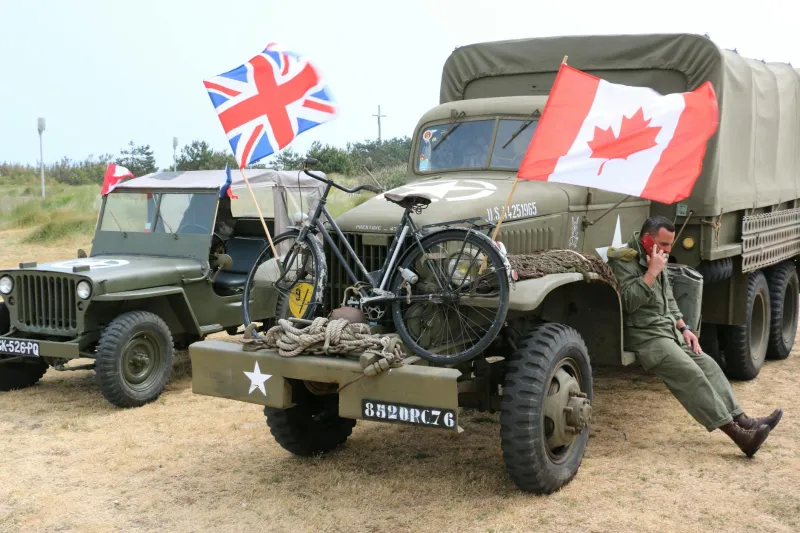
Every military unit needed vehicles—jeeps, trucks, half-tracks, and armored vehicles that had to function in deserts, jungles, Arctic conditions, and battle zones where the nearest mechanic might be 500 miles away. The Army's solution was radical: train everyone in basic mechanical skills and give selected personnel intensive automotive training that compressed years of apprenticeship into months of focused instruction.
Sergeant Robert "Wrench" Williams, who ran motor pool training at Fort Knox, described the philosophy: "We didn't have time to baby these engines. Every soldier had to understand how his vehicle worked, how to fix it when it broke, and how to keep it running with whatever parts he could find or make."
 Photo: Fort Knox, via img.freepik.com
The training was comprehensive and practical. Soldiers learned to read engine sounds like a language, to diagnose problems by feel and smell, and to fabricate replacement parts using battlefield scrap. They studied hydraulics, electrical systems, and metallurgy not from textbooks, but from vehicles that their lives depended on.
The Tools They Brought Home
When these veterans returned to civilian life, they brought more than mechanical knowledge—they brought a fundamentally different relationship with machinery. Unlike previous generations who might take a broken appliance to a repair shop, these veterans instinctively reached for tools.
Veteran John Kowalski, who served in the Pacific Theater, recalled: "In the Army, if something broke, you fixed it. There was no calling for help, no waiting for parts. You figured it out with what you had. When I got home and my neighbor's car wouldn't start, I popped the hood without thinking. To me, every mechanical problem was just a puzzle to solve."
This mindset spread rapidly through American communities. Veterans became the neighborhood go-to experts for anything mechanical. They fixed cars, lawn mowers, washing machines, and farm equipment. More importantly, they taught these skills to their sons, neighbors, and friends.
The Birth of Hot Rod Culture
The veterans' mechanical confidence coincided perfectly with the postwar boom in automobile manufacturing. Suddenly, there were surplus military vehicles, cheap civilian cars, and a generation of men who understood exactly how to modify them.
The hot rod movement exploded in the late 1940s, driven largely by veterans who saw cars not as mysterious machines, but as mechanical systems they could improve. They stripped down Model A Fords, souped up engines, and created entirely new categories of performance vehicles.
Dry lakes racing in Southern California became a testing ground for veteran-built hot rods. These weren't wealthy enthusiasts with professional mechanics—they were former GIs who built 150-mph racers in backyard garages using knowledge gained in motor pools from Normandy to Okinawa.
 Photo: Southern California, via www.transports-mithieux.com
The Golden Age of the Corner Garage
The veterans' mechanical skills also fueled the boom in independent repair shops. Thousands of former soldiers used their GI Bill benefits and military training to open small automotive businesses. Unlike pre-war mechanics who often specialized in specific brands or systems, these veteran-mechanics could work on anything.
By 1955, there were over 200,000 independent automotive repair shops in America—many owned and operated by WWII veterans. These shops became community institutions, places where mechanical knowledge was shared freely and where the next generation learned that fixing things yourself wasn't just possible, it was normal.
Bob Martinez, whose father opened Martinez Auto Repair in 1947, remembered: "Dad could fix anything that rolled. He'd teach anyone who wanted to learn. Saturday mornings, there'd be a dozen neighborhood kids watching him work, learning how engines really functioned. It was like a free mechanical education."
The Decline of DIY Confidence
This culture of automotive self-reliance began to fade in the 1980s and 90s as cars became more complex and computerized. The mechanical intuition that served veterans so well with carburetors and points-based ignition systems became less relevant in an age of fuel injection and electronic engine management.
Moreover, the veterans themselves were aging out of active mechanical work. Their sons and grandsons, who grew up in an era of greater prosperity and specialization, were less likely to develop the same hands-on confidence with machinery.
By 2000, the average American driver was far more likely to call for professional help with mechanical problems than to attempt repairs themselves. The cultural assumption that "real men fix their own cars" had largely disappeared.
The Lost Knowledge
What died with the veteran-mechanic generation wasn't just technical knowledge—it was a particular approach to problem-solving. These men had learned to work with limited resources, to improvise solutions, and to understand machines at a fundamental level that went beyond following repair manuals.
They could listen to an engine and identify problems that modern diagnostic computers might miss. They understood the mechanical relationships between different systems in ways that allowed them to predict failures before they occurred. Most importantly, they weren't intimidated by complexity—they approached mechanical problems with confidence born from experience.
The Modern Revival
Interestingly, there are signs of renewed interest in automotive DIY culture. YouTube mechanics, maker spaces, and vintage car restoration communities are rediscovering some of the hands-on approaches that the WWII generation took for granted. The difference is that today's mechanical enthusiasts are choosing to learn these skills, while the veterans had them thrust upon them by necessity.
Some automotive educators argue that we lost something important when we moved away from the veteran generation's approach to mechanical problems. Modern automotive technology may be more sophisticated, but the fundamental principles of mechanical troubleshooting remain the same.
The Legacy in Metal and Memory
The next time you see a beautifully restored 1950s hot rod or visit a small-town garage that's been in business for 70 years, you're likely seeing the legacy of those WWII motor pool training programs. The mechanical confidence that shaped American car culture for decades began not in Detroit's design studios, but in Army motor pools where young soldiers learned that understanding how things work is the first step toward making them work better.
Their tools may have gathered dust, but their approach to mechanical problems—methodical, resourceful, and fearless—represents a lost chapter in America's relationship with the machines that move us.