When American Farmers Almost Became Their Own Gas Stations
The Fuel Revolution That Never Happened
Picture this: pulling into your neighbor's farm, not for fresh eggs or tomatoes, but to fill up your tank with corn-based ethanol they distilled in a converted barn. Sounds like science fiction? For a brief moment in the 1920s and 30s, this was America's most promising energy future.
While Henry Ford was perfecting his Model T, a parallel revolution was brewing in farm country. Rural chemists, agricultural cooperatives, and mechanically-minded farmers were experimenting with something radical: making their own car fuel from whatever crops grew locally.
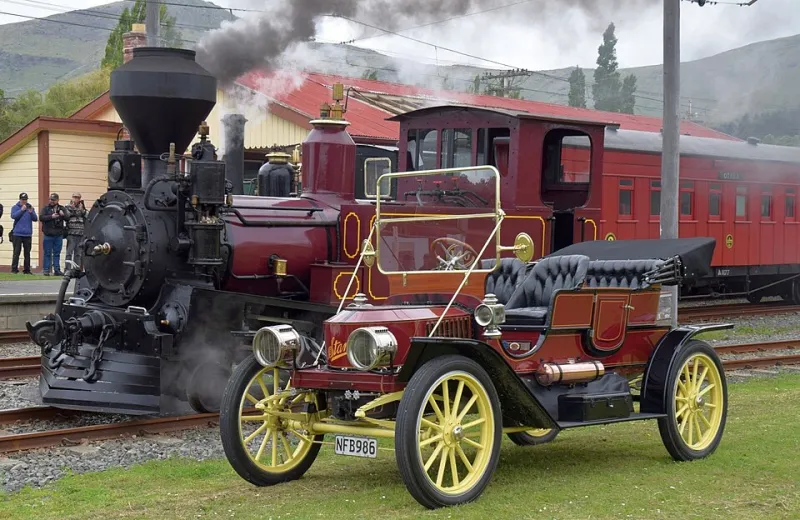
 Photo: Model T, via makecnc.com
 Photo: Henry Ford, via i.pinimg.com
From Kitchen Scraps to Liquid Gold
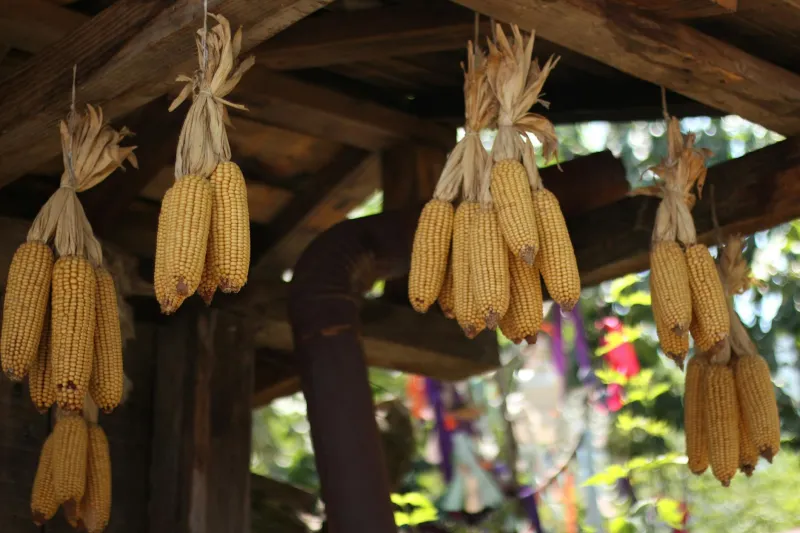
The science wasn't complicated. Ethanol—essentially grain alcohol—could power internal combustion engines just as effectively as gasoline. The raw materials were everywhere: corn kernels, wheat chaff, sugar beets, even potato peels and apple cores. Any organic matter containing sugar or starch could be fermented and distilled into motor fuel.
What made this movement remarkable wasn't the chemistry—it was the economics. In rural areas where gasoline had to be trucked in from distant refineries, homegrown ethanol often cost half as much to produce. Farmers who grew their own fuel could bypass the entire petroleum supply chain.
Small-scale distilleries began popping up across the Midwest. The Dearborn Independent, Henry Ford's own newspaper, ran detailed instructions for building backyard ethanol stills. Agricultural extension offices distributed pamphlets with titles like "Your Farm Can Fuel Your Ford." For a moment, energy independence seemed within reach of anyone with a few acres and basic chemistry knowledge.
The Network That Big Oil Couldn't Ignore
By 1930, an informal network of farmer-fuel producers had emerged. Rural cooperatives pooled resources to build shared distilleries. Mechanical engineers designed compact stills that could fit in a garage. Agricultural colleges offered courses in "farm fuel production."
The movement had serious backing. The Department of Agriculture published favorable reports on ethanol's potential. State fairs featured ethanol-powered tractors and automobiles. Nebraska, Iowa, and other corn-belt states considered legislation to promote farm-based fuel production.
More troubling for oil companies: the fuel worked. Ethanol-powered vehicles performed comparably to gasoline engines, sometimes better. The higher octane rating meant less engine knock. Cold-weather starting was actually easier with ethanol blends.
The Quiet Campaign to Kill Competition
What happened next reads like a case study in corporate strategy. The petroleum industry didn't attack ethanol directly—that would have been too obvious. Instead, they focused on infrastructure and regulation.
Oil companies negotiated exclusive distribution deals with gas station chains. They lobbied for fuel quality standards that favored petroleum products. Most effectively, they invested heavily in refinery capacity and pipeline networks, driving down gasoline prices to levels that made small-scale ethanol production economically unviable.
The coup de grâce came through taxation. Federal excise taxes on ethanol production—originally designed to regulate drinking alcohol—remained in place for motor fuel. Meanwhile, oil depletion allowances gave petroleum companies significant tax advantages.
When Prohibition Accidentally Helped Big Oil
Ironically, Prohibition dealt the farmer-fuel movement a devastating blow. Federal agents, already suspicious of any alcohol production, began raiding farm distilleries. Even legitimate fuel producers found themselves entangled in bootlegging investigations.
The legal distinction between beverage alcohol and motor fuel became a bureaucratic nightmare. Permits were expensive and difficult to obtain. Many farmer-producers simply gave up rather than navigate the regulatory maze.
By 1935, the grassroots ethanol movement had largely collapsed. A few industrial-scale plants survived, but the dream of energy independence through backyard chemistry was effectively dead.
The Roads Not Taken
Today, as America grapples with energy security and climate change, this forgotten chapter feels remarkably contemporary. The basic technology that excited 1920s farmers—converting biomass to liquid fuel—powers modern ethanol blends at gas stations nationwide.
But something was lost in the transition from farm-scale to industrial production. The original movement represented more than alternative fuel—it embodied a different relationship between Americans and their energy sources. Instead of being passive consumers, rural communities briefly glimpsed becoming energy producers.
Surviving records from the era reveal an optimism that's hard to imagine today: technical journals discussing "energy democracy," farm magazines calculating how many acres could fuel a family's annual driving, agricultural cooperatives planning regional fuel networks.
Lessons From the Laboratory of Democracy
The farmer-fuel movement failed, but its brief existence proved something important: decentralized energy production was technically feasible with 1920s technology. The barriers weren't scientific—they were economic and political.
Modern renewable energy advocates might find inspiration in this lost history. Solar panels and wind turbines represent a return to the distributed energy model that farmer-chemists pioneered nearly a century ago. The technology has changed, but the fundamental challenge remains the same: how do communities build energy independence in a system designed for centralized control?
The next time you pass a cornfield or see ethanol-blended gasoline at the pump, remember: for a brief moment in American history, that corn might have powered your great-grandfather's Model T, distilled in a neighbor's barn rather than processed in a distant refinery. It's a reminder that the energy systems we take for granted aren't inevitable—they're the result of choices made long before most of us were born.