The Roadside Dreams That Built Family Vacations—Then Vanished Overnight
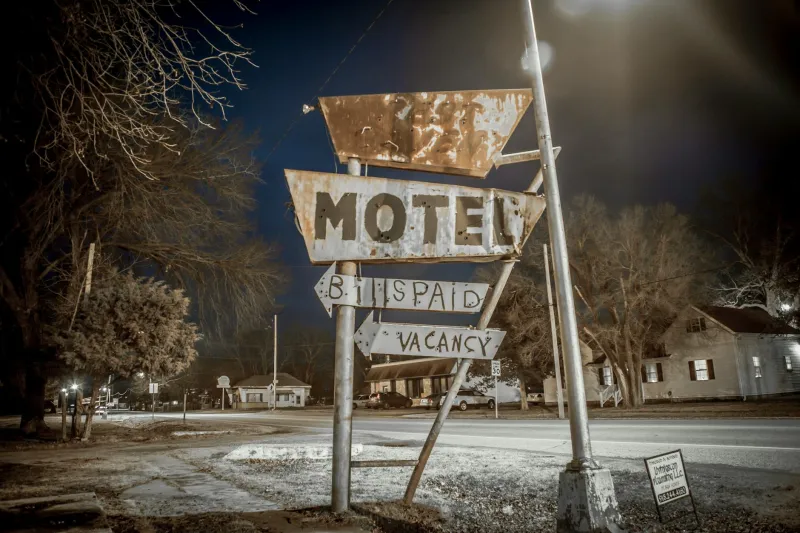
The Invention of the American Family Road Trip
Before anyone had heard of Holiday Inn or Best Western, America's highways were lined with something far more interesting: motor courts that looked like miniature villages, complete with themed cabins, roadside attractions, and owners who knew every guest by name.
These weren't just places to sleep—they were destinations that transformed car travel from a necessary evil into a family adventure. For nearly two decades, independent motor courts taught Americans that the journey could be just as exciting as the destination.
Then, almost overnight, they disappeared.
When Staying the Night Became an Adventure
The golden age of motor courts ran roughly from 1935 to 1955, coinciding with America's love affair with automobile travel. Unlike hotels, which were designed for business travelers arriving by train, motor courts catered specifically to families exploring the country by car.
The architecture was pure Americana: clusters of individual cabins arranged around a central office, often themed around local history or regional culture. The Wigwam Village chain featured concrete tepees large enough for entire families. The Coral Court in St. Louis built Art Deco masterpieces with built-in garages. Desert motor courts in the Southwest embraced adobe styling and cactus gardens.
 Photo: Coral Court, via coralcourt.ca
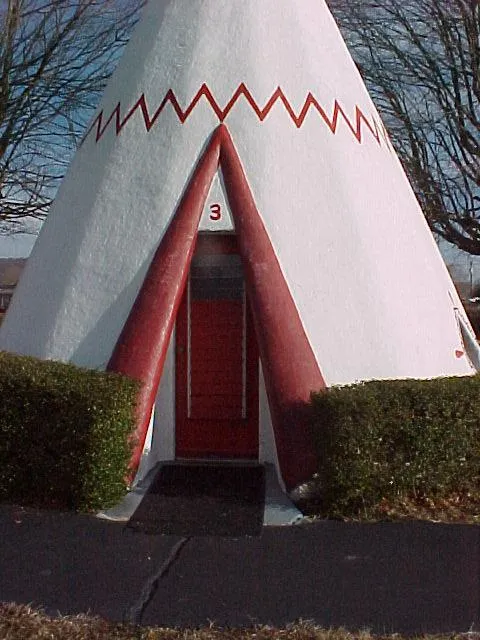 Photo: Wigwam Village, via www.worldslargestthings.com
Owners competed not just on price and cleanliness, but on sheer creativity. Motor courts featured miniature golf courses, petting zoos, swimming pools shaped like guitars, and roadside diners serving regional specialties. Some offered horseback riding, others had their own airstrips for flying guests.
The Social Engineering of Family Fun
What made motor courts revolutionary wasn't just their quirky architecture—it was their understanding of family psychology. Traditional hotels catered to adults traveling for business. Motor courts were designed around the assumption that successful family travel required keeping everyone entertained.
Children got their own spaces: playgrounds, game rooms, and pools designed for splashing rather than serious swimming. Parents could relax on cabin porches while kids explored safely within the motor court grounds. Teenagers found jukeboxes and soda fountains that made even a gas stop feel like a social event.
This wasn't accidental. Many motor court owners were families themselves, often husband-and-wife teams who understood the challenges of traveling with children. They built amenities based on their own experiences, creating a hospitality model that treated family travel as a distinct category requiring specialized solutions.
The Economics of American Optimism
Motor courts represented something uniquely American: the belief that small-scale entrepreneurship could compete with big business through creativity and personal service. Most were family-owned operations with fewer than twenty rooms, run by people who lived on-site and knew their regular customers personally.
The business model was surprisingly sophisticated. Motor courts couldn't compete with hotels on luxury or with auto camps on price, so they created an entirely new category: affordable family entertainment. Guests paid not just for a room, but for an experience that made the overnight stop part of the vacation itself.
Successful motor court owners became local celebrities, featured in travel magazines and automobile club guides. The best properties developed loyal followings—families who planned entire vacation routes around their favorite motor courts.
The Cultural Revolution of Car Travel
Before motor courts, family travel was largely limited to visiting relatives or staying in expensive downtown hotels. Motor courts democratized vacation travel, making it accessible to middle-class families with modest budgets and adventurous spirits.
This accessibility created a new American ritual: the family road trip. Parents who had never traveled beyond their home states began planning elaborate cross-country adventures. Children grew up expecting summer vacations to involve discovery and exploration rather than simply visiting grandparents.
Motor courts also changed how Americans thought about regional culture. Unlike chain hotels, which offered standardized experiences, motor courts celebrated local character. Staying at the Chief Motel in Wyoming meant learning about Native American history. The Orange Grove Motor Court in Florida introduced northern families to subtropical agriculture.
The Interstate Highway Act: Progress as Destruction
In 1956, President Eisenhower signed the Federal-Aid Highway Act, launching construction of the Interstate Highway System. The legislation was sold as a national defense measure and economic development tool, but its impact on motor courts was swift and devastating.
Interstates bypassed the small towns and scenic routes where motor courts thrived. The new highways were designed for efficiency, not exploration. They routed traffic away from Main Street America and toward standardized interchanges where national hotel chains could build large properties with economies of scale that family-owned motor courts couldn't match.
Within a decade, hundreds of motor courts had closed. Properties that had been profitable for twenty years suddenly found themselves on roads that no longer carried through traffic. Some owners tried relocating near interstate exits, but they faced competition from Holiday Inn, Howard Johnson's, and other chains that offered familiar brands and standardized amenities.
The Lost Art of Roadside Hospitality
What died with the motor courts wasn't just a business model—it was an approach to hospitality that treated guests as individuals rather than room numbers. Motor court owners knew their regulars' preferences: which cabin families preferred, whether they traveled with pets, how they liked their coffee in the morning.
This personal touch extended to local knowledge. Motor court owners served as informal travel advisors, recommending scenic detours, local restaurants, and roadside attractions that weren't in any guidebook. They were cultural ambassadors for their regions, helping visitors understand local history and customs.
Chain hotels, designed for efficiency and consistency, couldn't replicate this personal approach. Standardization was their strength, but it came at the cost of the regional character that had made motor court travel so appealing.
The Preservation Race Against Time
Today, fewer than a hundred historic motor courts remain in operation, scattered across back roads and forgotten highways. A small but passionate preservation movement is racing to document these survivors before they disappear entirely.
The Route 66 corridor contains some of the best-preserved examples: the Blue Swallow Motel in New Mexico, the Munger Moss Motel in Missouri, the Wigwam Motel in Arizona. These properties survive partly through nostalgia tourism, but mostly through the dedication of owners who view themselves as custodians of American travel history.
Preservationists face unique challenges. Unlike grand hotels or historic homes, motor courts were built as modest, functional structures. Their significance lies not in architectural grandeur but in their role in democratizing American travel culture.
The Road Trip Legacy
Although motor courts largely vanished, they left an indelible mark on American culture. The family road trip tradition they pioneered continues today, even if the roadside infrastructure has changed. Modern families still pack cars for cross-country adventures, still seek out regional experiences and local character.
The boutique hotel movement of recent decades represents, in many ways, a return to motor court principles: unique properties that celebrate local culture and offer personalized service. The difference is scale and price point—today's boutique accommodations cater to affluent travelers rather than middle-class families.
Perhaps most importantly, motor courts proved that Americans were hungry for authentic regional experiences. They demonstrated that standardization, while efficient, couldn't fully satisfy the human desire for discovery and connection. That lesson remains relevant as we navigate an increasingly homogenized travel landscape.
The next time you're planning a road trip, consider taking the old highways instead of the interstates. You might not find a functioning motor court, but you'll travel the same routes where American families first learned that getting there could be half the fun.