The Emergency Order That Accidentally Rewired American Driving Forever

When America Hit the Brakes
On January 2, 1974, President Richard Nixon signed what would become one of America's most controversial and longest-lasting traffic laws. But the Emergency Highway Energy Conservation Act wasn't crafted in transportation departments or safety labs—it was scribbled together in the White House during an energy crisis that had gas lines stretching around city blocks.
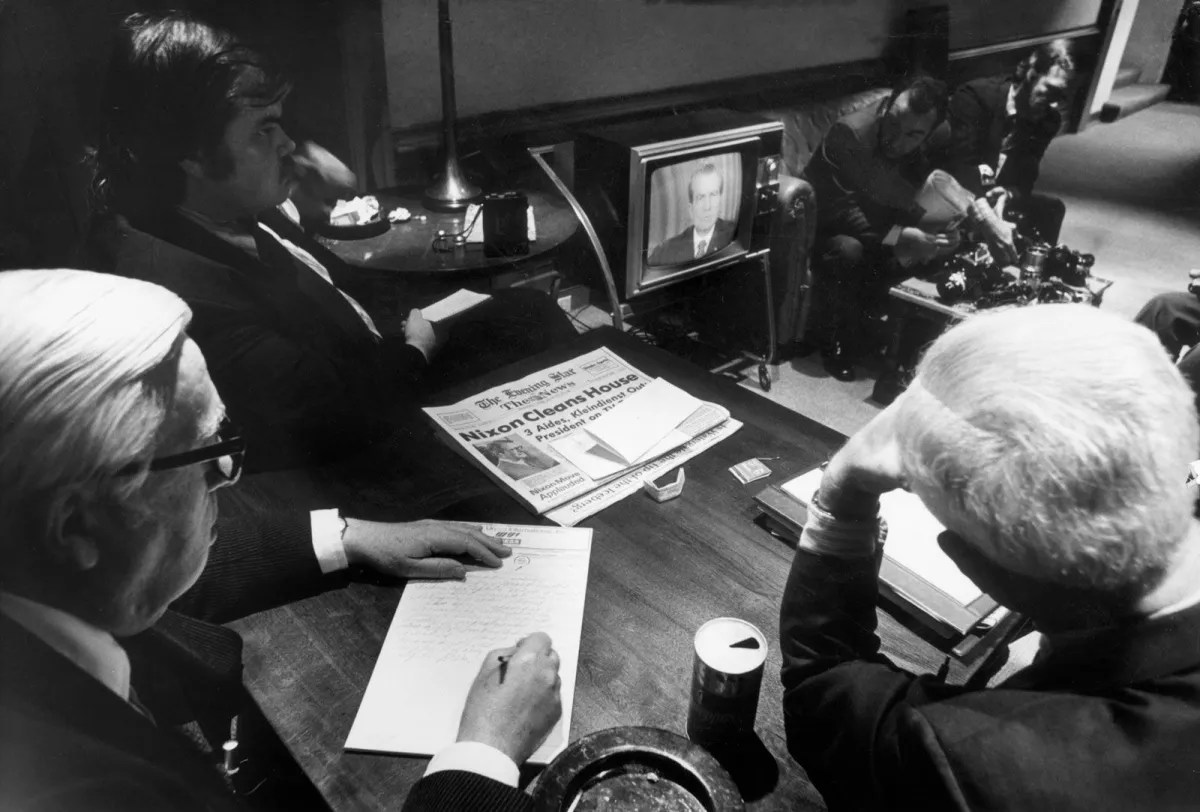 Photo: Richard Nixon, via cdn.britannica.com
The story of how 55 mph became America's sacred speed reveals something fascinating about how emergency measures become permanent culture. What started as a desperate attempt to save gasoline quietly transformed into the foundation of modern traffic enforcement.
The Memo That Changed Everything
October 1973: Arab oil producers had just launched an embargo against the United States. Gas prices doubled overnight. Service stations ran dry. Americans faced something unthinkable—actual fuel scarcity in the land of the interstate highway.
Inside the Nixon administration, panic was setting in. Energy advisors were projecting catastrophic economic impacts. Transportation Secretary Claude Brinegar was fielding calls from governors reporting highway shutdowns due to fuel shortages.
 Photo: Claude Brinegar, via images.mubicdn.net
Then someone in the Department of Transportation produced a single-page analysis that would change American driving forever. The memo was startlingly simple: highway fuel consumption drops dramatically at lower speeds. A car traveling 55 mph uses roughly 17% less fuel than the same vehicle at 70 mph.
The math was compelling enough to build policy around. Within weeks, Congress had passed the Emergency Highway Energy Conservation Act, establishing a national maximum speed limit of 55 mph. States that didn't comply would lose federal highway funding.
The Accidental Safety Bonus
Here's where the story gets interesting: the speed limit worked better than anyone expected, but not necessarily for the intended reasons.
Highway fatalities dropped immediately—by 16% in the first year alone. This wasn't anticipated. The law was written to save fuel, not lives. But slower traffic meant fewer severe crashes, fewer multi-car pileups, and more time for drivers to react to emergencies.
Transportation officials found themselves with an unexpected public relations goldmine. What politician wants to argue against a law that's demonstrably saving lives? The fuel crisis that created the speed limit eventually ended, but the safety argument proved much more durable.
By 1975, highway safety organizations were touting 55 mph as a triumph of evidence-based policy. The emergency energy measure had been quietly rebranded as a public health intervention.
The Enforcement Revolution
The 55 mph limit created something unprecedented in American law enforcement: a universal traffic violation. Suddenly, every highway patrol officer in the country was enforcing the same standard.
This uniformity had unintended consequences. Police departments discovered that speed enforcement generated significant revenue through fines. Radar technology, previously used mainly by military and aviation, became standard police equipment. The highway patrol evolved from a mostly rescue-oriented service into a revenue-generating enforcement mechanism.
Traffic court systems expanded to handle the volume of speeding citations. Driver education programs began emphasizing speed compliance over defensive driving skills. The entire infrastructure of modern traffic law enforcement grew up around maintaining a speed limit that was originally intended to last only until the oil crisis ended.
The Cultural Shift Nobody Planned
Perhaps most remarkably, 55 mph changed how Americans thought about driving itself. Before 1974, highway speeds varied dramatically by region and road conditions. Western states routinely posted limits of 75 or 80 mph. Rural areas often had no posted limits at all.
The national speed limit created, for the first time, a shared driving culture across the entire country. A driver's license from Maine meant the same thing in Montana. Traffic laws became federalized in a way that the Constitution's framers never envisioned.
This cultural standardization extended beyond speed. Insurance companies began using speeding violations as universal risk indicators. Automotive manufacturers designed vehicles to optimize performance at 55 mph. Even highway construction standards shifted to accommodate the new normal of slower traffic.
When Emergency Becomes Permanent
The oil crisis officially ended in 1974, but the speed limit remained. What had been sold as a temporary emergency measure became entrenched through a combination of safety advocacy, enforcement revenue, and simple bureaucratic inertia.
By the 1980s, few Americans remembered that 55 mph started as fuel conservation. Polls showed that most drivers believed the speed limit had "always" been a safety measure. The emergency origins of the law had been effectively erased from public memory.
This transformation reveals something profound about American policy-making: how quickly extraordinary measures become ordinary assumptions. The same pattern appears throughout history—temporary wartime regulations that outlast the wars, emergency economic controls that become permanent bureaucracies.
The Long Road to Repeal
It took until 1995 for Congress to finally repeal the national speed limit, returning authority to individual states. But by then, the damage—or transformation, depending on your perspective—was complete.
Modern traffic enforcement, highway design standards, automotive engineering, and driver education all bear the permanent imprint of what was supposed to be a temporary fuel-saving measure. Even today, many states maintain speed limits close to the original 55 mph standard, not because of federal mandates, but because twenty years of enforcement created institutional momentum that's difficult to reverse.
The Lesson Hidden in Plain Sight
The story of America's speed limit offers a fascinating case study in unintended consequences. A desperate attempt to conserve gasoline during a supply crisis accidentally created the foundation of modern traffic safety policy.
More broadly, it demonstrates how emergency measures can reshape society in ways their creators never imagined. The bureaucrats who crafted the 1974 speed limit law thought they were writing temporary energy policy. Instead, they rewrote the social contract between Americans and their automobiles.
The next time you see a 55 mph sign, remember: you're looking at a fossil from the 1973 oil crisis, a piece of emergency legislation that accidentally became one of the most enduring examples of federal influence on daily life. It's a reminder that the rules we follow aren't always the result of careful planning—sometimes they're just the unintended consequences of people trying to solve yesterday's crisis.