Scratched Into the Stall: The Secret Code System That Protected Truckers Before the Internet Existed
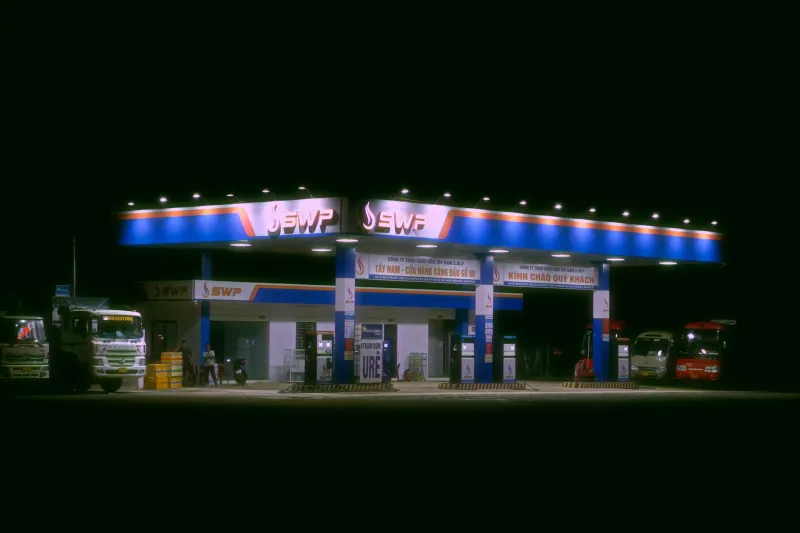
If you stopped at a certain rural truck stop somewhere off I-40 in the late 1970s and knew what to look for, the men's bathroom had more useful travel intelligence than anything you'd find at the front counter.
Not in the obvious, juvenile sense. In the other sense — the practical, life-saving sense. Scratched into the tile above the second urinal, someone had left a warning. To the untrained eye it looked like random initials and numbers. To a long-haul driver who'd been on the road long enough, it was a speeding ticket waiting to be avoided, a crooked weigh station flagged for inspection, or a stretch of black ice that the highway department hadn't posted yet.
This was the truck stop graffiti network. And it was one of the most effective grassroots information systems America ever produced.
How It Started — Nobody Planned This
The network didn't have a founder or a launch date. It grew organically, the way useful things tend to grow when people desperately need them and nobody else is providing them. Long-haul trucking in the postwar decades was a world of long silences, unreliable maps, and a law enforcement landscape that varied wildly from county to county.
A driver who got nailed by a speed trap in a small Tennessee town on a Tuesday might stop at the next truck stop, walk to the bathroom, and scratch a quick warning into the wall before climbing back into the cab. Simple. Immediate. Potentially saving the next driver a hundred-dollar fine.
Over time, the practice evolved into something more structured. Regulars on specific routes developed shorthand that became semi-standardized through repetition. Certain symbols meant radar enforcement. Others flagged weigh stations known for aggressive inspections or scales that drivers suspected were miscalibrated to generate overweight fines. Some notations warned about road conditions — a bridge with a notorious shimmy, a curve that got lethal in the rain, a stretch of interstate where deer crossings were practically guaranteed after dark.
Cracking the Code
The language was never formally written down, which was partly the point. It had to be opaque enough that civilians and law enforcement wouldn't immediately understand it, but transparent enough that any experienced driver could read it cold.
Some elements were nearly universal. A string of numbers following a highway designation usually indicated a milepost or county line where enforcement was concentrated. Initials paired with a thumbs-up or thumbs-down scratch — often just an upward or downward slash — rated a weigh station master or a particular stretch of road. Fuel prices, sometimes surprisingly accurate, got scrawled near the pump handles or on the inside of fuel bay doors.
The bathroom stall was the primary medium, but it wasn't the only one. Picnic tables at rest areas accumulated years of layered notations. The backs of trucking route maps, left in cab exchange lots, sometimes carried dense margin annotations that read like a field guide to a specific corridor. Some truck stops became known as "good information stops" — places where the graffiti was dense, well-maintained, and worth taking five minutes to read before pulling back onto the highway.
The Social Contract Behind the Scrawl
What made this work was an unspoken ethic. You didn't leave bad information. You didn't use the system to mess with competitors. The whole thing ran on trust, and that trust was enforced not by rules but by reputation — a concept that carries real weight in a community where the same faces cycle through the same stops for decades.
Drivers who left accurate warnings earned a kind of invisible credibility. Those who left bad intel — whether maliciously or carelessly — found their contributions quietly ignored or crossed out. The system had its own editorial process, rough and anonymous as it was.
There were also things the graffiti network didn't discuss. It stayed away from personal disputes, stayed focused on road-relevant information, and maintained a kind of utilitarian discipline that kept it useful. It was community infrastructure, not social media.
When CB Radio Changed the Game — And What Came After
The widespread adoption of CB radio in the 1970s didn't kill the graffiti network — it actually layered on top of it. CB gave drivers real-time communication, which was enormously useful. But CB was also ephemeral. A warning broadcast on Channel 19 lasted as long as the transmission. A warning scratched into a bathroom stall lasted for years.
The two systems served different purposes and coexisted comfortably until the internet began to reshape trucker communication in the late 1990s. Forums like Truckers Report and later Reddit communities dedicated to long-haul driving picked up many of the same functions — speed trap warnings, weigh station status updates, fuel price comparisons, road condition reports. The information migrated from bathroom tile to browser tab, but the underlying logic was identical.
Today, apps like Trucker Path and CDL-specific overlays in navigation software have formalized much of what the graffiti network did informally. Some truckers still joke that the app is just a digital bathroom wall. They're not entirely wrong.
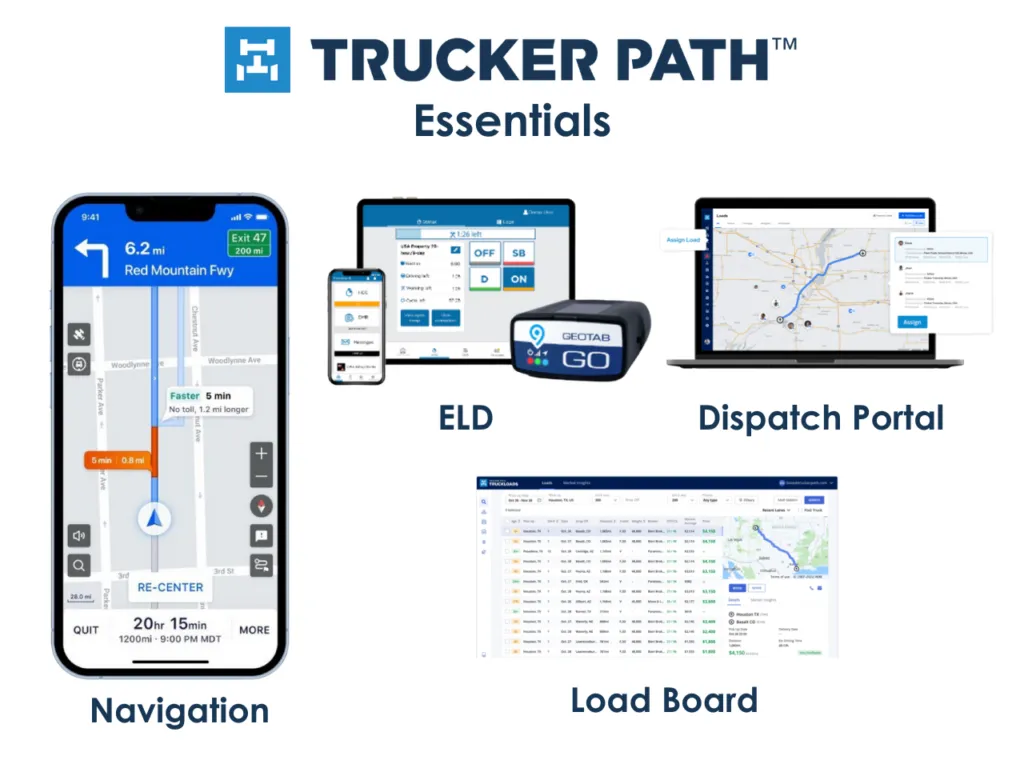 Photo: Trucker Path, via www.trucknews.com
What the Walls Knew
The truck stop graffiti network is mostly gone now. Chain truck stops renovate regularly, and the independent stops that harbored the densest archives have largely closed. A few old-timers remember reading the walls as a standard part of a fuel stop routine — a quick scan before washing up, same as checking the weather.
But the thing worth sitting with is this: a completely spontaneous, entirely self-organized communication system developed among strangers who shared nothing but a highway and a common interest in getting home safely. No company built it. No government funded it. It just appeared, because people needed it.
Some of the most reliable information networks in history have worked exactly that way.