Tuned to Static, Until Someone Answered: The Tiny Highway Radio Stations That Became a Trucker Party Line
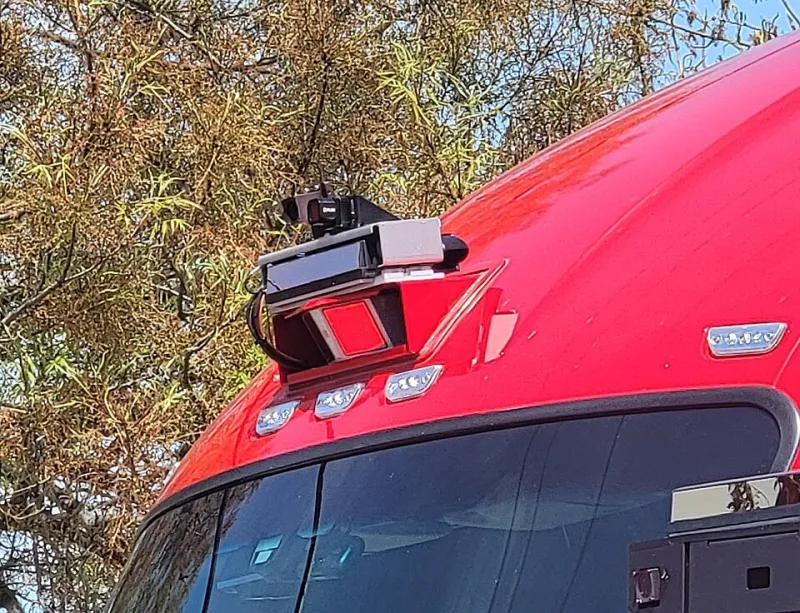
Photo: Votpuske, CC BY-SA 4.0, via Wikimedia Commons
Picture this: you're barreling down a two-lane stretch of US Route 83 somewhere in the Nebraska sandhills, and your radio crackles to life. It's not a DJ. It's not an ad for a personal injury lawyer. It's a guy in a Freightliner twenty miles ahead of you, casually noting that there's a state trooper parked behind the grain elevator and that the truck wash in Valentine is finally open again.
He's not supposed to be talking to you. But he is — and if you know where to tune, you'll find him.
The Stations That Were Never Meant for Conversation
Officially, these are called Traveler Information Stations — low-power AM transmitters, usually limited to a 10-watt signal that carries maybe 40 miles under ideal conditions, often far less. State departments of transportation and the National Park Service operate thousands of them. Their intended job is dull and noble: broadcast construction detours, wildfire closures, fog advisories, and the eternal classic, "This radio frequency is provided as a service to travelers."
They're the reason your radio sometimes lands on a robotic voice telling you that Exit 212 is closed for paving. Most of us punch past them without a thought.
But here's what the FCC's rulebook doesn't say: many of these stations have live operators. And some of those operators — along with a loose coalition of long-haul truckers, RV snowbirds, and highway maintenance workers — figured out decades ago that a shared frequency is an invitation.
The Accidental Revival of a Dead Radio Culture
If you're of a certain age, this all sounds familiar. CB radio was the trucker's lifeline in the 1970s — part traffic report, part gossip mill, part rolling comedy club. Smokey and the Bandit turned channel 19 into American folklore. Then cell phones happened, and CB culture faded into a hobbyist niche.
Except it didn't fully die. It migrated.
The traveler information bands became one of its hiding spots. On certain stretches — particularly rural corridors in the Plains and Mountain West where cell coverage drops and the DOT stations run with a human behind the mic — drivers discovered they could key up and get an answer. A county road supervisor in Kansas might read out road conditions on request. An RV couple boondocking through Nevada might report an accident before any app knows about it. Truckers trade speed trap intel, fuel price gossip, and the kind of hyperlocal knowledge no algorithm has ever scraped.
It's not sanctioned. The stations are licensed for one-way broadcasting, not two-way chat. But enforcement is thin, and the culture runs on a gentleman's agreement: keep it useful, keep it clean, and don't clog the channel when someone's asking about ice on the overpass.
Why the Weakest Signal in America Still Matters
What makes this subculture fascinating is what it reveals about technology and human nature. We built a nationwide cellular network, satellite radio, and real-time traffic apps — and yet, in the dead zones where all of that fails, a 10-watt transmitter and a stranger's voice still get the job done.
There's also a practical payoff for regular drivers. Those stations genuinely do carry information faster than you might expect. When a highway department employee flips the mic on after a crash, they're often minutes ahead of the traffic map on your phone. And if you learn to scan the low end of the AM dial — the 530–1700 kHz traveler band — in unfamiliar territory, you're tapping into a system that covers most major interstates and a surprising number of park roads.
RV forums and trucking communities keep unofficial lists of the chattier stations, passed around like fishing spots. Some long-haul drivers describe tuning in as the highlight of a lonely leg through Montana. One retired hauler put it this way in a radio hobbyist forum: "Out there, that little station's the difference between talking to a machine and talking to a neighbor."
The Road Ahead
The stations aren't going anywhere — in fact, they've quietly modernized, with some DOTs syncing them to automated alert feeds. But the human chatter persists, stubborn as ever, in the gaps between the official announcements.
So the next time your radio drifts across a flat, robotic voice telling you about a bridge inspection, pause before you punch the button. Somewhere out on that same stretch of asphalt, someone may be waiting to tell you something the recording never will. All you have to do is listen — and sometimes, answer.