Chalk Dust and Charcoal: The Secret Language Hobos Painted Across Depression-Era America
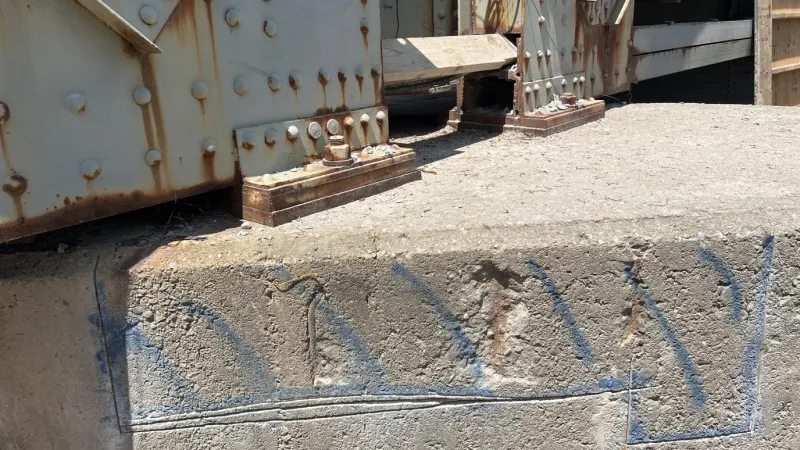
Photo: vintage chalk markings on old railroad bridge concrete, via www.wellington.ca
Here's a question worth sitting with: how did a penniless traveler in 1933 figure out whether the town ahead had a sheriff who'd run him out by sundown — without a phone, a map, or a single word of warning from anyone who'd been there before?
The answer was scrawled on a fence post in charcoal.
A Network Built From Nothing
During the Great Depression, as many as two million Americans were on the move, hopping freight trains and walking between towns looking for work. They called themselves hobos, and they were not wanderers by accident — they were travelers in the most literal sense, moving along routes that had been blazed by thousands before them.
And like any group of travelers, they needed information. Which towns fed you? Which ones jailed you? Where was the cop friendly, and where was the dog mean?
Their solution was brilliantly low-tech: a shared symbol system, often called the hobo code. A simple mark scratched in chalk or drawn in coal dust could tell the next person everything they needed to know. Two short lines meant the local police were hostile. A drawing of a cat meant a kind-hearted woman lived nearby. A cross could signal a religious talk coming — or free preaching, and possibly a free meal with it. A circle with two parallel lines through it? Danger. Keep moving.
There were marks for "safe to camp here," marks for "you can scare this homeowner into giving you food by acting sick," and even a symbol for a courtroom, letting travelers know exactly what they might be walking into downtown.
Crowdsourcing Before Crowdsourcing Existed
What makes the hobo code genuinely remarkable isn't just that it existed — it's the structure of it. Think about what these marks actually were: user-generated data, contributed voluntarily, maintained collectively, and distributed across an entire continent with no central authority. Each traveler who passed through a town was both a consumer of the network and a contributor to it.
If that sounds familiar, it should. It's the exact architecture of a review site, a traffic app, or a crowdsourced map — except it ran on charcoal, railroad bridges, and trust between strangers who would never meet.
The code wasn't standardized in any official way, which somehow makes it more impressive. Regional variations sprang up, symbols drifted in meaning, and yet the system worked well enough that it spread from coast to coast. A mark drawn in Montana could be read by someone who learned the basics in Georgia.
The Marks That Refused to Fade
Here's the part that turns this from a history lesson into a treasure hunt: the code didn't fully disappear when the Depression ended.
Hobo culture persisted for decades afterward, and the marks kept appearing on the infrastructure travelers relied on — water towers, boxcar interiors, the concrete abutments of railroad bridges. Many of those structures are still standing. Railroad bridges from the 1920s and '30s, some still carrying trains, some abandoned and slowly rusting into the landscape, occasionally still bear faint scratches that were messages to a stranger a century ago.
Railroad historians and amateur archaeologists have documented surviving marks in old rail yards and along abandoned lines, and preservation-minded photographers occasionally post images of what they believe to be authentic hobo code. It's worth being honest that not every mysterious scratch on a century-old bridge is hobo code — but enough genuine examples survive that the network left a physical fossil record.
Some of the most poignant finds come from inside retired boxcars, where travelers marked the walls the way people today leave comments on a forum. A roll call of the transient, written in chalk.
Why It Still Matters
There's a temptation to file the hobo code away as a quaint Depression footnote, but it deserves better. It's proof that people will always build information networks out of whatever they have — chalk if that's what's available, satellites if it's not.
It's also a reminder of what those networks are for at their best: not convenience, but survival. The person who drew a warning about a hostile town wasn't optimizing a commute. They were protecting someone they'd never meet, purely because they'd been that stranger themselves once.
So the next time you cross an old railroad bridge or pass a weathered water tower in a small town, take a second look at the marks on the concrete. Most will be nothing. But every so often, you might be reading a message meant for a stranger a hundred years ago — a one-star review of a sheriff, a five-star review of a diner, written in the only currency that mattered.
The road has always been talking. We've just mostly forgotten how to listen.