Where Did the Sunday Drive Go — And Why Some People Are Bringing It Back
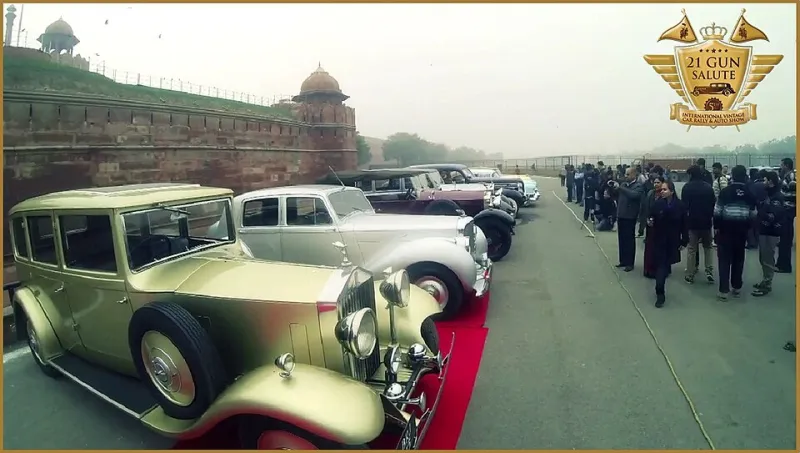
Photo: Sujoy Roy, CC BY-SA 4.0, via Wikimedia Commons
Somewhere between the invention of the GPS and the rise of the podcast playlist, Americans stopped going for drives just to go for drives.
For most of the twentieth century, the Sunday drive was a genuine cultural institution. After church, after a big lunch, families climbed into the car with no particular destination in mind. They drove through neighborhoods they'd never visited, out into the countryside, down roads they'd always been curious about. The point wasn't to get anywhere. The point was the going.
Today, that idea sounds almost quaint — and its quiet disappearance says something interesting about how our relationship with driving, and with unstructured time, has fundamentally changed.
How the Sunday Drive Became an American Ritual
In the early years of automobile ownership, just driving was the novelty. Cars were expensive, roads were improving, and the simple act of traveling under your own power — faster than a horse, unbound by train schedules — felt genuinely remarkable. By the postwar era, when car ownership became widespread and the Interstate Highway System started stitching the country together, the Sunday drive evolved into something more intentional.
It was leisure in motion. A way for families to talk without the pressure of sitting across from each other at a table. A way for couples to decompress. A way for individuals to think through problems while the landscape rolled by. Psychologists have since written about how the mild, rhythmic stimulation of driving — the road passing beneath you, the scenery shifting — produces a mental state somewhere between focused and free-associative. The Sunday drive, it turns out, was accidental therapy.
For kids who grew up in the 1960s and 70s, these drives were a fixture of family memory — stopping at an ice cream stand in a town you'd never been to, spotting a roadside attraction and pulling over on impulse, getting genuinely, pleasantly lost and having to figure your way home.
The Slow Disappearance
The Sunday drive didn't die all at once. It faded.
Gas prices climbed sharply in the 1970s, and the oil crisis made aimless driving feel irresponsible. Suburban sprawl made the routes less interesting — more strip malls, fewer open roads within easy reach. Then came the entertainment revolution of the 1980s and 90s: cable television, video games, and eventually the internet gave people compelling reasons to stay home on Sunday afternoons.
But the real death blow might have been the smartphone and the navigation app. GPS didn't just make driving more efficient — it fundamentally changed the psychological experience of being in a car. When every trip has a route, an ETA, and a turn-by-turn voice telling you what to do next, driving becomes a task to be completed rather than an experience to be had. Getting lost isn't charming anymore; it's a failure of the algorithm.
The Sunday drive depended on a certain tolerance for purposelessness. That tolerance has become genuinely rare.
The Numbers Behind the Shift
It shows up in the data, too. Americans today drive more total miles than ever, but a growing share of those miles are transactional — commuting, errand-running, rideshare trips, delivery routes. The Federal Highway Administration tracks Vehicle Miles Traveled, and while the raw numbers are high, surveys consistently show that discretionary pleasure driving has declined sharply over the past three decades.
Younger drivers are particularly unlikely to describe driving as enjoyable in its own right. For many people under 35, a car is infrastructure, not an experience.
The Quiet Revival
And yet — something interesting is happening at the edges.
Across the country, small communities of people are deliberately reclaiming the aimless drive. Some are car enthusiasts who've always treated Sunday mornings as a ritual, meeting up in diner parking lots before sunrise and heading out with no route planned. Others are newer converts: people burned out on optimization culture who have started to treat an unstructured afternoon drive the way their grandparents might have treated a long walk — as a way to reset.
There are online communities dedicated to the practice, which has a certain irony to it. People using smartphones to coordinate phone-free drives. But the motivation seems genuine. Participants describe it in terms that would have sounded familiar to a 1965 family heading out after Sunday dinner: the pleasure of seeing something you didn't know was there, the feeling of moving without agenda, the way a good long drive can untangle something in your head that sitting still couldn't.
Some participants make a specific point of leaving the navigation app closed. They pick a direction and follow their curiosity — turn left because the road looks interesting, stop because a sign caught their eye. It's a deliberate act of resistance against the tyranny of the optimized route.
What We Actually Lost
The Sunday drive wasn't just a pastime. It was a way of relating to your own geography — of knowing, in a slow and personal way, the landscape you lived in. People who took regular drives knew the back roads, the seasonal changes, the towns that didn't show up on the main routes. That kind of knowledge is harder to come by when every trip runs through the same efficient corridors.
There's also something to be said for what the drive did for the people inside the car. Shared purposelessness turns out to be a surprisingly good environment for conversation. The road gives you something to look at together, which takes the pressure off the talking.
Maybe that's why the people bringing it back seem so enthusiastic about it. It's not nostalgia exactly. It's more like rediscovering something that worked, in an era that's forgotten why it worked in the first place.
Put the phone in the glove box. Pick a direction. See what's out there.