What the Road Was Telling You Before the Weather App Existed
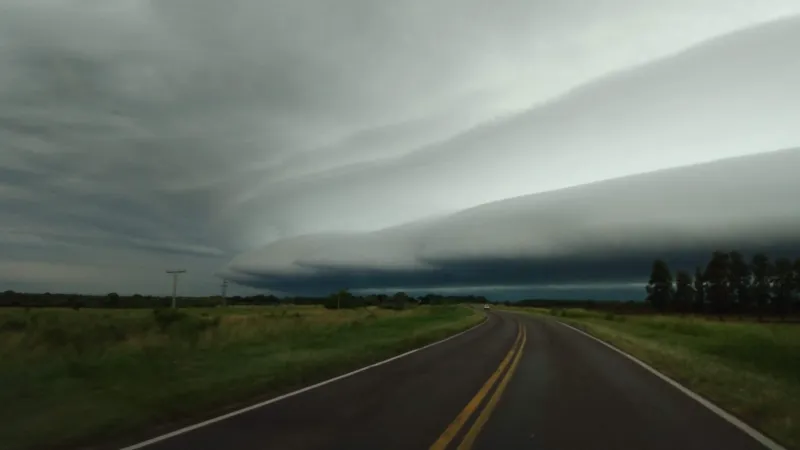
There's a moment that longtime drivers describe in almost identical terms, even when they've never met each other and learned their craft in completely different parts of the country. You're moving along a highway at a good clip, conditions are clear, your destination is hours away — and something changes. Not dramatically. Just a slight shift in how the steering wheel feels in your hands. A barely-perceptible looseness in the rear tires. A smell in the air that you couldn't name if someone asked you to but that you recognize immediately. And you know, without checking your phone or the radio, that rain is coming.
This wasn't magic. It was literacy. A specific kind of sensory fluency with the road that took years to develop and that most drivers today have never needed to acquire, because we outsourced it to satellites and algorithms sometime in the 1990s.
The Road as Instrument
Old driving manuals — the kind published by AAA and various state motor clubs from the 1940s through the 1970s — treated weather awareness as a core driving skill, not a bonus feature. They devoted entire sections to what drivers should be watching for, smelling for, and feeling through the seat and steering column.
The logic was practical and urgent: weather forecasting before the digital era was coarse and slow. A radio broadcast might tell you that rain was expected "this afternoon" across a three-state region. That wasn't useful information if you were trying to decide whether to push through a mountain pass or pull over in the next town. What was useful was the road itself, which communicated weather information with a specificity no broadcast could match.
Experienced drivers learned to read it.
The Smell Test
Petrichor — the scent released when rain hits dry earth — is now well-documented in atmospheric chemistry. But long before scientists named it, drivers knew it. The smell of incoming rain on hot asphalt is distinct from rain on dry soil, which is distinct from rain approaching over water. Drivers who logged serious miles across varied terrain learned to distinguish these scents and estimate both the direction and proximity of a storm system from them.
This wasn't folklore. The chemistry is real: rainfall releases compounds from soil and pavement that travel ahead of the weather system, carried by the same wind patterns that are pushing the storm. A driver heading west into an approaching storm from the east could smell it coming, sometimes twenty to thirty miles before the first drops fell.
The practical value was real, too. That's enough distance to find a pull-off, top off the tank, check the tire pressure, and prepare — rather than getting caught in the first dangerous minutes of a storm when roads are most slick and visibility drops fastest.
What Your Tires Were Saying
Here's one that surprises people who haven't heard it before: tire behavior changes before the rain arrives, not just after.
As humidity rises ahead of a storm system, road surfaces begin to change subtly. Dust, oils, and particulates that accumulate on dry pavement start to react to the increased moisture in the air. This creates a micro-layer on the road surface that changes how tires grip — not dramatically, but perceptibly to someone paying close attention. Experienced long-haul drivers described this as a slight "softening" of the road's feedback through the steering wheel. The car didn't feel dangerous. It just felt different. And different meant pay attention.
Similarly, temperature drops that precede storm fronts affect tire pressure and, consequently, handling. A driver who knew their vehicle well could feel a pressure change through the steering before a dashboard gauge (if the car even had one) would register it.
Reading the Sky Like a Map
Cloud literacy was a genuine part of the experienced driver's toolkit. Not in a meteorology-textbook way — most of these drivers couldn't tell you the difference between a cumulonimbus and an altocumulus if you quizzed them. But they'd learned, through observation and consequence, what certain sky conditions meant for the road ahead.
A specific shade of greenish-yellow light in the afternoon sky meant potential severe weather. A particular pattern of high, thin clouds moving quickly in one direction while lower clouds moved in another was a wind shear indicator — relevant to anyone driving through exposed terrain like plains or mountain passes. The rate at which shadows moved across the road ahead could tell you how fast a cloud system was traveling and whether you were driving toward it or away from it.
Vintage driving manuals from the 1950s and '60s sometimes included hand-drawn cloud identification charts — not for meteorological interest, but as practical navigation tools. The sky was information, and information was safety.
What We Lost When We Gained the App
None of this is an argument against weather apps, which are genuinely excellent and have saved countless lives. Knowing that a tornado warning is in effect for your county, delivered to your pocket in real time, is unambiguously better than sniffing the air for petrichor.
But something was lost in the trade, and it's worth naming. The sensory engagement that pre-digital drivers maintained with their environment made them more present, more attentive, and arguably more responsive to the road in ways that extended beyond weather. A driver who was actively reading tire grip, air smell, and sky color was a driver who was awake — not in the physiological sense, but in the attentional sense. They were in the drive, not just occupying it.
There are still drivers who practice these skills deliberately. Older truckers who learned them before GPS and keep them sharp out of habit. Rally drivers who work in conditions where digital tools fail. Instructors at advanced driving schools who include sensory awareness in their curriculum specifically because it builds the kind of road presence that technology can supplement but never fully replace.
The road hasn't stopped talking. Most of us have just stopped listening.