Before Yelp, Mechanics Had Their Own Network — And It Was Surprisingly Sophisticated
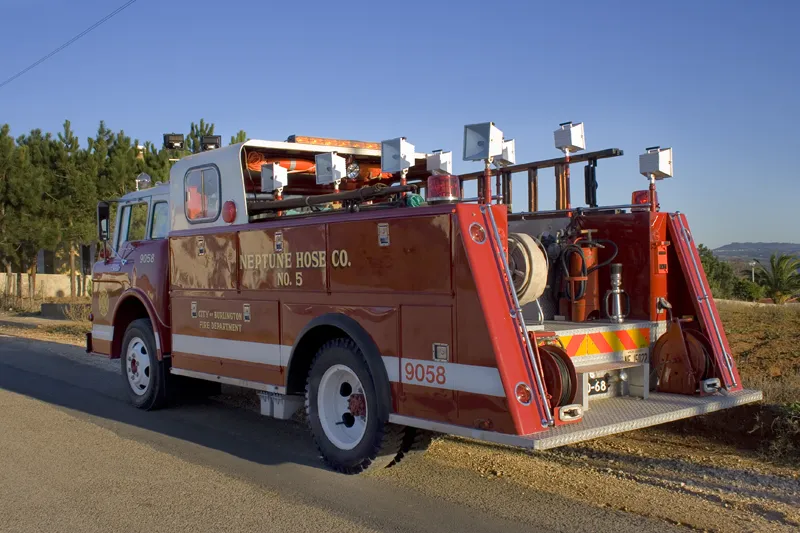
Photo: Consultlink-Bruno Costa, Public domain, via Wikimedia Commons
Walk into a certain kind of independent auto shop — the kind that's been on the same corner for forty years, with a hand-painted sign and a waiting room that still has a coffee maker from 1987 — and pay attention to the corkboard near the register. Odds are you'll see a cluster of business cards from other shops. Not competitors, exactly. More like colleagues.
That corkboard is a remnant of something that most people never knew existed: an informal but surprisingly functional knowledge network that independent mechanics built and maintained for decades before the internet gave everyone a platform. It was how they survived, how they learned, and how they kept their customers from going to the dealership.
The Problem That Created the Network
Independent shops have always operated on a knife's edge. They compete against dealerships with factory training, proprietary diagnostic equipment, and parts pipelines that a one-bay shop in rural Ohio simply can't match. For most of the twentieth century, the independent mechanic's main advantage was personal relationships and local knowledge — and the only way to grow that knowledge was to share it.
When a mechanic in 1975 encountered a weird electrical gremlin on a '72 Buick Riviera that he'd never seen before, he couldn't search a forum. He couldn't watch a YouTube teardown. He called another mechanic he trusted, or he drove to a regional trade gathering and asked around. If he was lucky, someone had seen it before. If he was really lucky, they'd written it down somewhere.
That need — to solve problems that no manual covered, to find parts that the supply chain didn't carry, to stay current on a constantly expanding universe of vehicles — is what drove independent shops to build their own networks from scratch.
The Business Card as a Trust Document
One of the more fascinating artifacts of this era is the way business cards functioned as something closer to letters of introduction than advertising.
A card from a trusted shop wasn't just contact information. It was a signal. If a mechanic handed you his card and said "ask for Dave, tell him I sent you," that referral carried weight. It meant the referring shop had vouched for the receiving shop, and both parties understood that the relationship worked in both directions. You sent them overflow work. They sent you customers who needed something outside your specialty. You shared diagnostic tips over the phone when someone was stumped.
Some mechanics developed what amounted to informal specialty directories — handwritten lists of who in the region was the go-to person for diesel work, who knew European imports, who had connections to get discontinued parts. These lists were rarely shared widely. They circulated among trusted contacts, updated by hand, passed from mentor to apprentice like trade knowledge.
Regional Meetups and the Parts Grapevine
Parts availability was one of the biggest challenges for independent shops, and it drove a lot of the informal networking. Dealerships had access to OEM parts pipelines. Independent shops worked with jobbers and distributors, but for older vehicles or unusual problems, that supply chain often came up empty.
What filled the gap was a word-of-mouth parts grapevine that operated through a combination of swap meets, trade association meetings, and phone trees that would impress a modern logistics coordinator. A mechanic in central Illinois might know that a retired fleet manager in Indiana had a warehouse full of old Mopar components. That knowledge didn't come from a database. It came from years of attending regional gatherings and maintaining relationships with people who had things you needed.
The swap meets themselves were as much about information exchange as parts. Mechanics would spend hours comparing notes on specific vehicle problems, sharing workarounds for common failures, and trading the kind of hands-on diagnostic insight that never made it into service manuals. It was a living, oral knowledge base built entirely on trust and reciprocity.
The Codes Hidden in Plain Sight
There were subtler systems, too. Some regional mechanic communities developed shorthand — ways of signaling to other insiders what kind of work they did, what their reputation was, and whether they were worth trusting. A particular way of listing services on a shop's exterior sign, the specific trade publications displayed in a waiting room, even the brands of tools visible through an open bay door all communicated information to someone who knew how to read it.
It wasn't a secret society, exactly. But it functioned like one in the sense that the signals were legible to insiders and invisible to everyone else. A mechanic passing through an unfamiliar town could read a shop's exterior and make a reasonable judgment about whether it was worth stopping in to introduce himself.
What Survived the Internet
The internet didn't kill these networks so much as it absorbed and dispersed them. Online forums for specific makes and models replaced some of the phone-tree diagnostic sharing. Platforms like RockAuto changed the parts sourcing game dramatically. Yelp and Google Reviews took over the reputation function that referral cards once served.
But talk to mechanics who've been in the business for thirty or forty years and many of them will tell you that the digital version of the network is both more powerful and somehow less reliable. You can reach more people faster, but you can't always tell who actually knows what they're talking about. The old system's inefficiency was also its quality control — relationships took time to build, and that time filtered out the people who weren't worth trusting.
Some shops have deliberately held onto pre-internet practices. The corkboard with other shops' cards. The phone call to a trusted colleague before ordering a part. The handshake agreement to send each other overflow work during busy seasons. These aren't anachronisms so much as deliberate choices by people who understand what the informal network was actually for.
It was never really about information. It was about trust built slowly, in person, over time — the kind that an algorithm still hasn't figured out how to replicate.