The Grocery Aisles Were a Casino — And Your Grandmother Knew How to Count the Cards
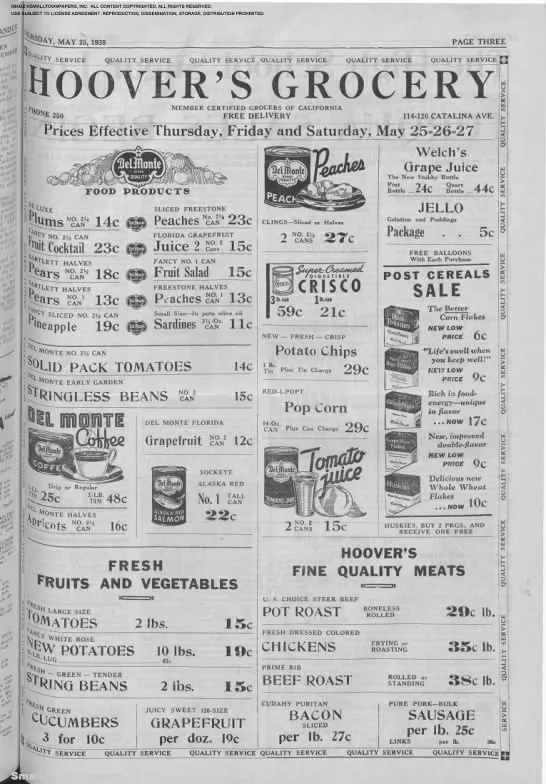
Photo: vintage 1930s supermarket grocery store advertisement newspaper circular, via s-media-cache-ak0.pinimg.com
In 1930s America, a strange battle raged in grocery stores across the country. Stores were selling coffee, flour, and eggs at prices that made no mathematical sense — literally below what the items cost to buy. Shoppers were cleaning up. Store owners were seething. And legislators in several states tried to ban the practice outright.
The item at the center of it all? A pricing strategy so durable that it's probably sitting in your supermarket's weekly circular right now, waiting for someone who knows what it is.
It's called the loss leader, and most shoppers walk right past it without ever realizing they're being hunted.
The Bait on Page One
The concept is beautifully simple and slightly devious. A store takes a popular item — historically coffee, nowadays often things like rotisserie chickens, soda, or holiday hams — and prices it below cost. The store loses money on every unit sold. On purpose.
Why? Because the loss leader isn't the product. It's the advertisement. The cheap coffee gets you through the door, and once you're inside pushing a cart, you'll grab the rest of your list at full markup. The store happily eats the loss on the coffee because the margin on everything else more than covers it.
The economics even have a name in retail circles: the traffic driver. Entire weekly ads are built around one or two of these items, splashed across the front page in giant type, while the fine print quietly recovers the difference.
Enter the Housewife Generals
Here's where the story gets fun. Depression-era shoppers, operating under genuinely tight budgets, didn't just notice the trick — they weaponized it.
Savvy shoppers of the 1930s understood that if Store A sold coffee below cost and Store B sold sugar below cost, the rational move was to buy the loss leaders at each store and skip everything else. So they did. Newspaper ads were compared over kitchen tables the way generals studied maps. Shopping trips became multi-store campaigns: coffee here, flour there, and a polite refusal to buy anything at full price along the way.
The stores, understandably, hated this. Some responded with purchase limits — "limit two per customer" — which survives today as a fossil record of the strategy working too well. Several states passed fair trade and unfair competition laws in the '30s and '40s partly aimed at below-cost selling, with retailers complaining that cutthroat pricing was driving everyone into ruin. The shoppers, meanwhile, saw it exactly as it was: a price war they intended to win.
The great grocery chess match of the Depression era faded as chains consolidated and pricing became more sophisticated, but the loss leader never left. It just got quieter.
How to Spot the Bait (and Use It)
The trick to shopping the loss leader way is learning to tell bait from background noise. A few tells:
It's on the front page. Loss leaders live in the marquee spots of the weekly ad — the item with the biggest font is usually the item the store is losing money on.
It's a known quantity. The best loss leaders are products with prices people memorize: eggs, milk, coffee, soda, holiday meats. Stores pick items where a deal is instantly recognizable.
It's limited. Quantity limits and "while supplies last" are the strongest signals. The store is capping its losses, which tells you exactly where the deals are.
It's seasonal. Turkeys before Thanksgiving and hams at Easter are legendary loss leaders — sometimes staggeringly cheap — because grocers know everyone's buying them and will buy everything else at the same time.
Once you've identified the bait, the strategy is the one Depression-era shoppers pioneered: buy the loss leaders, ignore the impulse aisles, and treat everything else as optional. Modern tools make it easier — weekly circulars are all online, and comparing three stores' front pages takes ten minutes. Some shoppers plan an entire week's staples around two or three stores' loss leaders and rarely pay full price for pantry basics.
One honest caveat: the strategy works best on staples, not perishables you'll waste, and it requires actually leaving the store with only the deals — which is harder than it sounds when the store is engineered, aisle by aisle, to prevent exactly that.
The Price War Never Ended
There's something satisfying about realizing the supermarket's oldest trick is also its most transparent. The bait is printed on the front page every single week. The stores are, in a sense, daring you to play the game correctly.
Your great-grandmother would have taken that dare without blinking. The front page of the circular isn't marketing — it's an invitation. All these years later, it still is.