Before Yelp, There Was the Reference Desk: How Librarians Became America's Secret Road Trip Experts
Before Yelp, There Was the Reference Desk: How Librarians Became America's Secret Road Trip Experts
Somewhere in a mid-sized public library in the American Midwest, there is a folded road map with handwritten notes in the margin. The ink is faded. The fold lines are soft from years of use. Someone has circled a small town in western Kansas and written next to it, in careful cursive: good pie, clean restrooms, ask for Edna.
That map is a relic of something most people have completely forgotten: the era when the public library was America's most reliable travel planning resource, and the librarian behind the reference desk was, quietly and without any official title, one of the best trip advisors in town.
The Collection Nobody Knew Was There
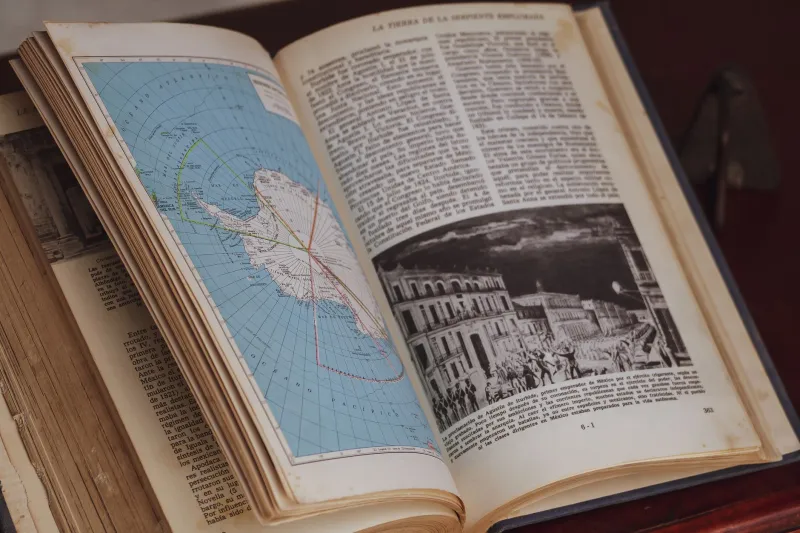
From roughly the 1930s through the 1980s, many American public libraries maintained what amounted to informal travel departments. The contents varied by location and budget, but the core materials were surprisingly consistent: AAA road guides, state highway maps (often donated in bulk by gas stations or state tourism offices), regional pamphlets from chambers of commerce, and collections of traveler journals donated by patrons who'd completed notable trips.
Some libraries went further. The reference librarians at branches in major cities — Chicago, Denver, Kansas City, Atlanta — developed genuine expertise in routing, compiling personal files on specific routes and destinations based on patron feedback accumulated over years. These weren't official institutional resources. They were personal projects, maintained out of professional pride and genuine curiosity by librarians who had fielded the same questions enough times to know that the published guides didn't always tell the full story.
The AAA TripTik was widely available, but it was standardized. What the library reference desk offered was something different: local knowledge, annotated over time, filtered through the experiences of real travelers who'd actually driven the roads and come back to report what they found.
The Art of the Personalized Route Note
Here's the part that sounds almost unbelievably charming in retrospect: some librarians wrote personalized route notes by hand for patrons planning long trips.
This wasn't a formal service. It evolved organically, the way the best library programs always did — a patron would come in asking for help planning a drive from, say, Indianapolis to Albuquerque, and the librarian would pull the relevant maps, consult whatever regional guides were on hand, and then — if they'd helped someone make the same trip before, or if a patron had donated notes from a recent drive — they'd add a handwritten page of specifics. Which stretch of Route 66 had the worst road surface in wet weather. Where the only reliable gas station was between Amarillo and Santa Rosa. Which motor courts were clean and which ones were best avoided.
These notes got tucked into map folds, clipped to guide pages, or handed over in small envelopes. They were ephemeral by nature — most of them didn't survive. But the ones that did are extraordinary documents. They read like letters from a knowledgeable friend, full of practical detail and the occasional dry observation that no official guide would ever print.
Why the Library? Why Not the Gas Station?
It's worth asking why this function landed at the library rather than somewhere more obvious. Gas stations gave away maps for decades — Esso, Gulf, and Standard Oil all maintained massive free map distribution programs that put hundreds of millions of road maps into American hands. AAA offices offered routing services. Travel agencies existed.
But the library had something none of those resources could provide: neutrality and accumulation. The gas station map showed you roads. The AAA routing service gave you the official recommended path. The library, over time, built a record of what actually happened when real people drove those roads — the detours that turned out to be worth it, the scenic routes that the highway department hadn't bothered to mark, the small-town restaurants that the Mobil guide had missed.
And crucially, the library kept everything. Donated journals sat on shelves. Annotated maps got filed. A librarian in Topeka who'd been answering travel questions for fifteen years had, in her head and in her files, a kind of distributed memory of thousands of American road trips. That was genuinely irreplaceable.
The Collections That Survived
Most of this material is gone. The maps deteriorated. The journals got weeded during collection updates. The librarians who maintained the informal expertise retired, and no one thought to document what they knew.
But not all of it vanished. A handful of public libraries — particularly in smaller cities and towns where the collections were never formally digitized and therefore never formally discarded — still quietly maintain road map archives and regional travel pamphlet collections. The Denver Public Library's Western History Collection includes traveler journals and annotated route materials from the early highway era. Several state libraries maintain collections of historical tourism ephemera that include genuinely useful historical routing information.
More interestingly, a small number of reference librarians — particularly in rural areas — still practice something close to the old tradition. Ask the right question at the right desk and you might still find someone who keeps a personal file of regional driving notes, accumulated from years of patron conversations, ready to share with anyone who asks.
What This Tradition Actually Was
It's tempting to frame this as a nostalgia story — a sweet, pre-internet thing that technology made obsolete. But that framing misses something important.
What those librarians were doing was curating lived experience and making it searchable. They were aggregating traveler knowledge, filtering it for reliability, and distributing it to people who needed it. Sound familiar? It's almost exactly what Yelp, TripAdvisor, and Google Maps do — except it was slower, more personal, and filtered through the judgment of a trained professional whose only agenda was helping you have a good trip.
The algorithm didn't invent that idea. It just scaled it.
Next time you're planning a road trip, it might be worth stopping by your local library before you open Google. You might be surprised what's still sitting quietly on those shelves, waiting to be useful again.