How a Shaving Cream Company Accidentally Became America's First Highway Safety Engineers
How a Shaving Cream Company Accidentally Became America's First Highway Safety Engineers
Somewhere along a two-lane blacktop in rural Minnesota in 1926, a driver who'd been staring at the same flat horizon for the past forty miles suddenly did something he hadn't done in a while: he laughed.
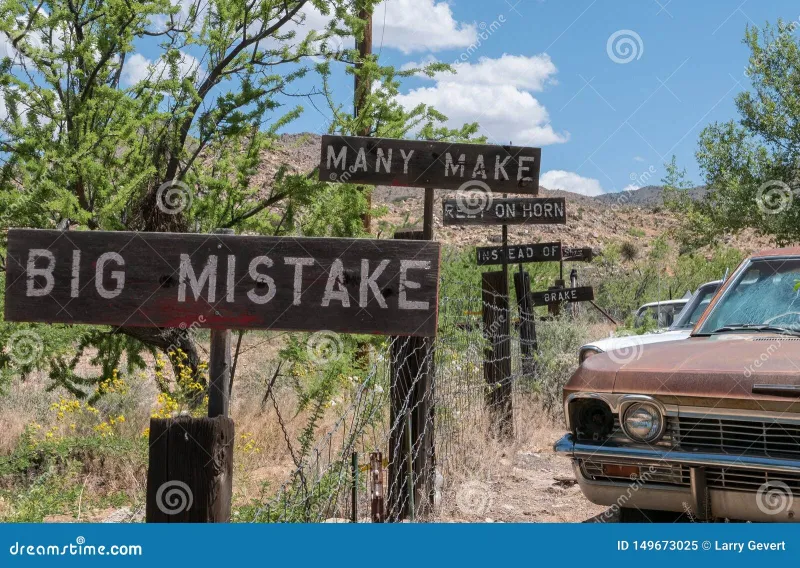
The cause? Five small red signs, spaced about a hundred feet apart, that read:
He had the ring / He had the flat / But she felt his chin / And that was that / Burma-Shave.
It sounds like a novelty. A quirky chapter in American advertising history. But what Allan Odell and his father Clinton accidentally stumbled onto that year was something traffic engineers are still quietly wrestling with today — a surprisingly elegant solution to one of the earliest and most persistent dangers of highway driving.
The Problem Nobody Had a Name for Yet
In the 1920s, American roads were getting longer, straighter, and more boring. That combination turned out to be quietly deadly. Drivers on rural stretches reported a strange, drifting sensation — a kind of waking sleep where the eyes stayed open but the mind checked out. Nobody called it "highway hypnosis" yet. They didn't need to. The ditch alongside the road told the story clearly enough.
The human brain, it turns out, is wired to disengage when its environment stops changing. Monotony isn't just dull — it's neurologically disruptive. Sustained attention on a featureless landscape causes the brain to essentially downshift, reducing alertness and slowing reaction time. Modern researchers have confirmed this with EEG studies showing brainwave patterns during highway driving can resemble light sleep.
Burma-Shave didn't know any of that. They just needed to sell shaving cream.
The Genius of the Drip-Feed
What made the Burma-Shave sign system genuinely brilliant — and genuinely accidental — was its structure. The signs weren't billboards. They were sequences. Each sign delivered one fragment of a rhyme, spaced far enough apart that a driver had to keep moving forward to get the punchline.
That spacing was everything. It created what behavioral scientists now call an "open loop" — an incomplete thought that the brain desperately wants to close. You couldn't get the joke from a glance in the rearview mirror. You had to stay engaged, read the next sign, then the next. By the time the last red board appeared with the Burma-Shave logo, you'd traveled nearly half a mile and your brain had been actively working the entire time.
The company eventually posted over 7,000 sign sets across 45 states. They ran contests inviting the public to submit poem ideas, which generated thousands of entries annually and turned the signs into a genuine cultural phenomenon. Kids in backseats would shout out the lines. Families would compete to finish the rhyme first. For a few hundred feet of rural highway, the car became alive again.
What the Traffic Engineers Eventually Noticed
Decades after the last Burma-Shave sign came down in 1963 — pulled after the company was sold and interstates made the old two-lane routes obsolete — transportation researchers started looking at what those signs had actually done to driver behavior.
The findings were uncomfortable in the best way. Studies on highway monotony confirmed that periodic, engaging visual stimuli spaced along long stretches of road measurably improved driver alertness. Not billboards, which drivers learn to ignore. Not warning signs, which become visual wallpaper after the first hundred miles. Something sequential. Something that demanded cognitive participation.
The Federal Highway Administration has quietly revisited this idea multiple times. Some states have experimented with humor-laced road signs — Iowa, for instance, has deployed witty messages on digital highway boards that drivers have reported actively looking forward to. Missouri and Minnesota have tested sequential safety messaging on rural stretches with promising attention-retention results.
The mechanism is essentially the same one Burma-Shave stumbled onto by accident: give the brain a reason to keep showing up.
Why It Mattered Then — And Still Does Now
Here's the part that should make you sit up a little straighter: highway hypnosis hasn't gotten better in the age of smartphones. It's arguably gotten worse. Modern interstates are engineered for efficiency, which often means long, featureless, perfectly banked straightaways that are physiologically designed to put your brain to sleep.
Rumble strips help. Lane departure warnings help. But they're reactive — they catch you after you've already drifted. What Burma-Shave did was proactive. It kept the brain engaged before it had a chance to wander.
Some transportation researchers have started using the term "cognitive road design" to describe the idea of intentionally building engagement into the driving environment — varied road curvature, strategic landscaping, even sequenced signage. It's a young field. But it has old roots.
The Road That Kept Talking to You
There's something almost poetic about the fact that a shaving cream brand from Minneapolis — desperate and underfunded, operating out of a family garage — accidentally pioneered a branch of applied neuroscience that traffic engineers are still mining for insights nearly a century later.
The Burma-Shave signs are mostly gone now. A few replicas exist at roadside museums and rest stops as nostalgic curiosities. But the idea they proved — that a road which gives drivers something to think about is a safer road — never really left.
Next time you're forty miles from anywhere and your eyes start going soft at the edges, you might wish someone had thought to put up five little red signs about a hundred feet apart.
Somebody did, once. It worked remarkably well.