Off-Ramp to Nowhere: The Ghost Exits Hiding in Plain Sight on America's Interstates
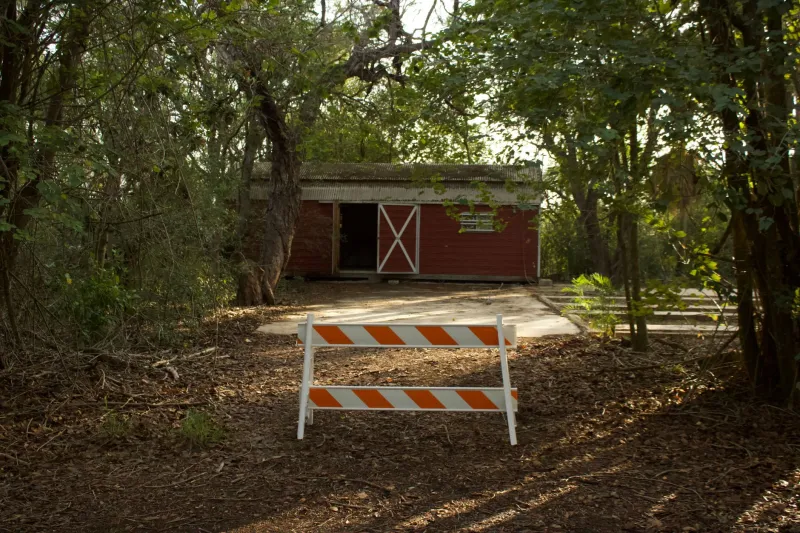
You're cruising down an interstate somewhere in the American interior — Ohio, maybe, or rural Mississippi — when you spot it. An off-ramp sign. A name that sounds like it should mean something. You take the exit on a whim, follow the curve of the ramp, and then… nothing. A cracked road that fades into a field. A chain-link fence. Maybe a concrete median that just stops, like someone hit pause mid-pour and never came back.
Welcome to America's phantom exits — and there are more of them than you'd think.
The Dream Before the Pavement
To understand why these exits exist, you have to go back to the late 1950s and 1960s, when the Interstate Highway System was the most audacious infrastructure project the country had ever attempted. Congress passed the Federal Aid Highway Act in 1956, and suddenly billions of dollars were flowing toward asphalt, concrete, and the collective belief that mobility would solve everything.
Cities, counties, and developers scrambled to position themselves along the new routes. If an interstate came within ten miles of your town, you lobbied hard to get an exit. If you were a real estate developer, you bought up land near the projected interchange, platted out a subdivision or an industrial park, and waited for the traffic — and the money — to roll in.
Sometimes it did. And sometimes the traffic never came, the developer went bust, the town council ran out of funds, and all that remained was the ramp itself, a concrete promise with nowhere to keep going.
The Anatomy of a Dead-End Exit
These phantom ramps come in a few distinct flavors, and each one tells a slightly different story.
The most common type is the developer's gamble gone cold. An interchange was built to serve a planned community or commercial corridor that either stalled in the permitting process or collapsed when the regional economy shifted. Interstate 86 in southern Idaho has a handful of these — exits labeled for towns that exist mainly as a post office and a grain elevator, surrounded by acreage that was once plotted for subdivisions that never broke ground.
Then there's the municipal optimism exit. A small city convinced state planners that growth was coming, that the exit would serve future neighborhoods and factories. The ramp got built as part of a larger contract. The growth didn't come — or came somewhere else. The exit remains, technically functional, practically pointless.
A third type is stranger still: the interrupted construction ramp. Federal funding dried up mid-project. A lawsuit halted work. A new administration redirected priorities. These exits sometimes end at a literal wall of dirt, a concrete barrier, or a fence with a small, embarrassed sign pointing back toward the highway.
Reading the Ruins
For anyone curious enough to follow these ramps to their ends, they function as a kind of archaeological record. The infrastructure tells you exactly how optimistic the planners were — and how quickly reality caught up.
In some cases, you'll find the ghost of a service road, the slab foundation of a gas station that was planned but never built, or the faded paint of a turn lane that led to an intersection that was never installed. In other cases, local farmers quietly absorbed the access road into their property over decades, and the official exit now deposits you at someone's driveway.
Highway historians and urban explorers have catalogued dozens of these across the country. A particularly well-documented cluster exists along older stretches of I-70 through Kansas and Missouri, where mid-century projections about agricultural industrialization created a rash of exits serving facilities that were either never built or shuttered within a decade.
What the Dead Ends Actually Tell Us
There's something unexpectedly revealing about these exits. They're not just navigational oddities — they're a physical record of how Americans have always approached the future: with enormous confidence and occasionally very little follow-through.
The interstate system was built on the assumption that traffic would grow forever, that cities would sprawl outward in predictable patterns, and that economic development would follow highways like water follows a downhill slope. Sometimes that assumption was right. The exits that led to truck stops and outlet malls and suburban developments proved the theory.
But the phantom exits prove something equally important: the future doesn't always show up where you built the on-ramp.
Urban planners today talk a lot about "induced demand" — the idea that building roads creates traffic rather than simply accommodating it. The ghost exits are the inverse of that concept. They're induced demand that never materialized. Infrastructure built for a future that chose a different route.
Still Out There, Still Waiting
Here's the thing that makes these exits genuinely fascinating rather than just sad: most of them are still on the maps. Google Maps will still route you onto them if you plug in the right coordinates. A few are even listed as active exits in state highway databases, maintained in the technical sense — mowed, signed, occasionally patched — even though they serve no functional purpose.
Some have found second lives. A handful of phantom ramps in rural areas have been quietly repurposed as equipment staging areas by county road crews. Others have become informal pull-offs for truckers who need a place to rest that doesn't show up on the official rest-stop maps.
And a few have become something almost poetic — quiet spots where people park to watch storms roll in across flat country, or where teenagers go to look at stars without light pollution. The exit goes nowhere, and somehow that makes it a destination.
Next time you see an off-ramp sign for a place you've never heard of, consider taking it. You might find a forgotten town, a crumbling foundation, or just a dead end with a surprisingly good view. Either way, you'll know something about America that most drivers never think to ask about.