The Parking Lot Paradox
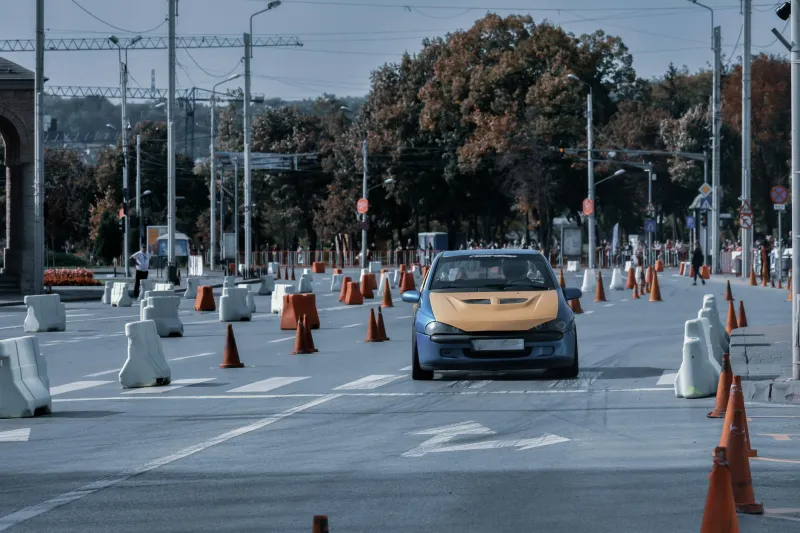
At the Skip Barber Racing School in California, something strange happens on the first day. Students who've paid thousands of dollars to learn high-performance driving spend their morning creeping around a parking lot at 5 mph, practicing figure-eights between orange cones. They're not learning to go fast — they're learning to go impossibly, frustratingly slow.
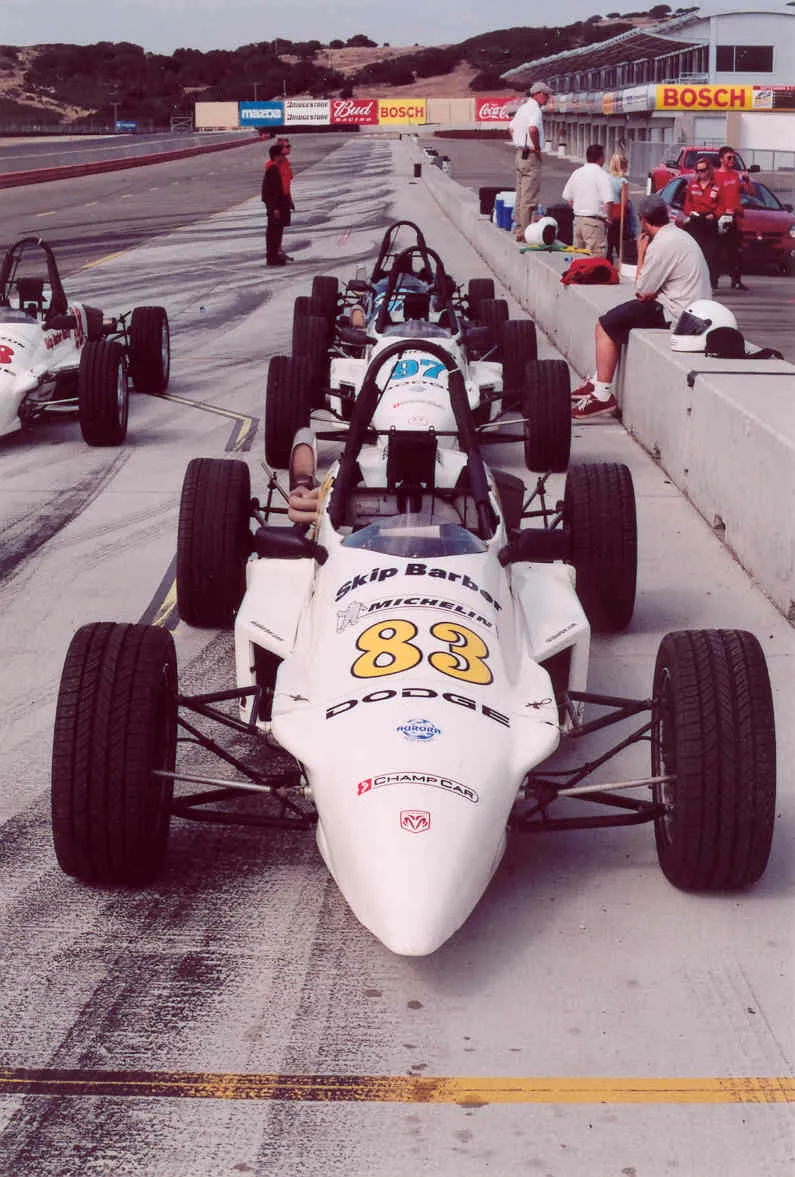 Photo: Skip Barber Racing School, via www.beesandgoats.com
And according to the instructors, this is the most important part of their entire program.
"Everyone thinks racing is about speed," says former IndyCar driver and chief instructor Maria Santos. "But the best drivers in the world are the ones who can be precise at any speed. And precision — real precision — can only be learned slowly."
 Photo: Maria Santos, via www.ecestaticos.com
This counterintuitive approach to driver training is spreading quietly through performance driving schools across the country, backed by emerging research in neuroscience and motor learning that challenges everything most people think they know about developing driving skills.
The Science of Slow
The theory behind slow-speed mastery comes from an unexpected source: neuroscience research on how the brain learns complex motor skills. When we attempt to learn physical tasks at high speed, our brains rely heavily on reflexes and muscle memory, often encoding mistakes alongside correct movements.
But when we slow down dramatically — to what researchers call "deliberate practice speed" — different neural pathways activate. The brain's conscious attention systems engage more fully, allowing for precise feedback and error correction that's impossible at higher speeds.
"Think of it like learning to write," explains Dr. Rebecca Chen, a neuroscientist at Stanford who studies motor learning. "You don't teach a child to write by having them scribble as fast as possible. You have them form each letter slowly and deliberately until the correct movements become automatic."
The same principle applies to driving. At 5 mph, drivers can feel exactly how their inputs affect the car's behavior. They notice the precise moment when the steering wheel input translates to tire movement. They sense how weight shifts as they apply brakes. They develop what instructors call "mechanical sympathy" — an intuitive understanding of how the vehicle responds to their commands.
The Elite Secret
This slow-speed training isn't just theory — it's being used by some of the world's best drivers. Formula 1 drivers regularly practice low-speed precision exercises. NASCAR champions spend hours in parking lots working on car control at speeds that would bore most amateur drivers.
The legendary racing instructor Ross Bentley, who's trained dozens of professional drivers, swears by what he calls "the crawl principle." His students at various racing schools across the country spend entire sessions driving courses at speeds so low that spectators often wonder if something's wrong with the cars.
"I can teach someone to go fast in an afternoon," Bentley explains. "But teaching them to be precise — that takes months of slow, deliberate practice. And precision is what separates good drivers from great ones."
The results speak for themselves. Students who complete intensive slow-speed training programs consistently outperform those who jump straight into high-speed instruction, both in terms of lap times and safety records.
Beyond the Track: Everyday Applications
What makes this training method particularly fascinating is how it translates to everyday driving. The skills developed through slow-speed precision practice — spatial awareness, smooth inputs, predictive thinking — are exactly the abilities that prevent accidents on public roads.
Driving instructors at civilian schools who've adopted these methods report dramatic improvements in their students' performance. New drivers who practice slow-speed car control show better vehicle positioning, smoother steering inputs, and more consistent braking than those trained through traditional methods.
"It's like the difference between learning to play piano by banging on keys versus practicing scales," says Janet Morrison, a driving instructor in Colorado who incorporates slow-speed training into her regular lessons. "The fundamentals have to be rock-solid before you can play the music."
The Frustration Factor
There's one major obstacle to widespread adoption of slow-speed training: it's incredibly boring for most people. Students at racing schools often complain about the tedious pace of early instruction. Everyday drivers practicing these techniques in empty parking lots report feeling like they're wasting time.
This frustration is actually part of the learning process. The mental discipline required to drive with precision at very low speeds — to resist the urge to speed up, to maintain focus on subtle feedback — builds the same concentration skills needed for high-performance driving.
"If you can't stay focused during slow-speed practice, you definitely can't stay focused at 150 mph," notes Santos. "The boredom is a feature, not a bug."
The DIY Approach
You don't need a racing school to benefit from slow-speed training. The basic principles can be practiced in any empty parking lot with a handful of traffic cones or even plastic bottles.
The key is maintaining artificially low speeds — typically 5-10 mph — while navigating increasingly complex patterns. Figure-eights, slaloms, and tight turns all help develop the precise steering inputs and spatial awareness that transfer to real-world driving situations.
Advanced practitioners add challenges like one-handed steering, threshold braking exercises, and even blindfolded straight-line driving (with a spotter, obviously) to heighten their sensory awareness of vehicle dynamics.
Rethinking Driver Education
Some driving schools are beginning to incorporate these principles into standard driver education programs. Instead of rushing students onto busy roads, they're spending more time in controlled environments, building fundamental skills at low speeds.
The early results are promising. Students trained with slow-speed methods show lower accident rates in their first year of driving compared to those who learned through traditional programs. They also report feeling more confident and in control of their vehicles.
The Counterintuitive Truth
Perhaps the most surprising aspect of slow-speed training is how it changes drivers' relationship with speed itself. Students who master precision at low speeds often find that they naturally drive more conservatively on public roads — not because they're afraid of speed, but because they understand how much control they lose when they exceed their precision threshold.
"Good drivers aren't necessarily fast drivers," observes Chen. "They're drivers who know exactly what their vehicle is doing at any given moment. And that awareness starts with learning to feel the car at the slowest possible speeds."
In a culture obsessed with speed and performance, the idea that elite drivers practice going slow seems almost absurd. But the evidence is mounting that this counterintuitive approach might be the key to developing truly exceptional driving skills — whether your goal is winning races or simply getting home safely every night.
The road to driving mastery, it turns out, begins with barely moving at all.