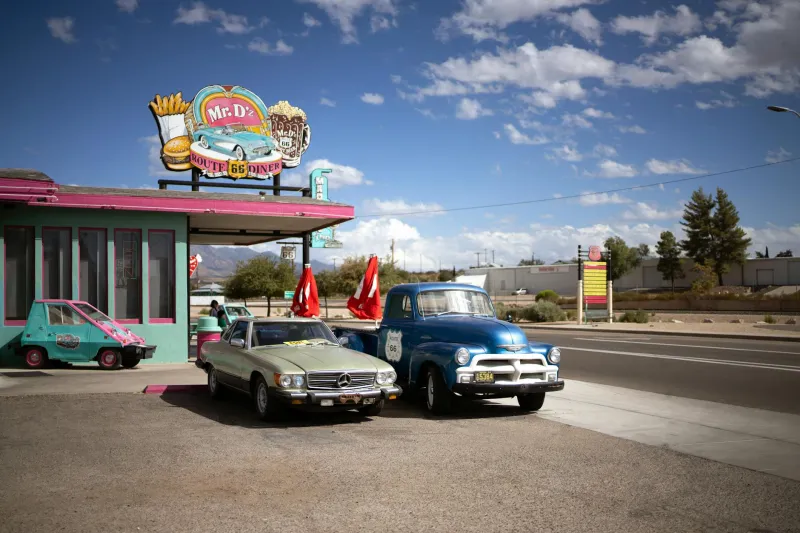
At 3:47 AM on a Tuesday morning in 1987, long-haul trucker Mike Delacroix was nursing his third cup of coffee at a Flying J in Oklahoma when the waitress — a woman named Betty whose name tag was held on with electrical tape — leaned over and said quietly, "You heading north on 35? Don't. State patrol's got a speed trap setup just past the Pauls Valley exit, and there's black ice forming around mile marker 72."
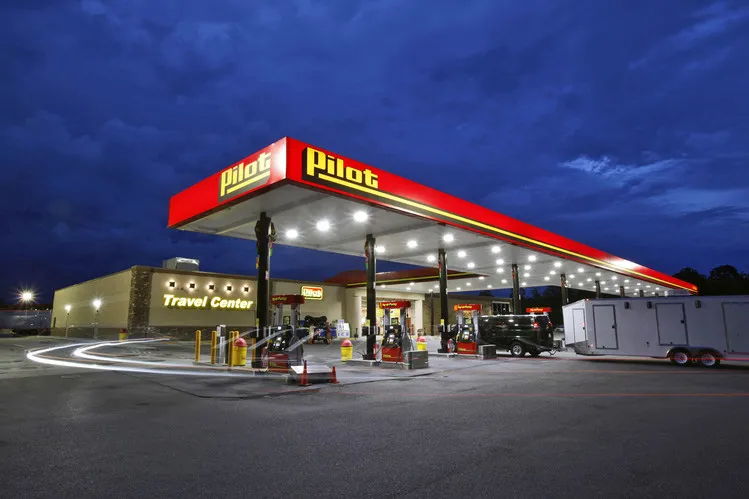 Photo: Flying J, via www.ellismodular.com
Delacroix had been driving trucks for fifteen years and had never seen a weather report mention ice conditions that specific. But Betty had been refilling coffee cups for truckers all night, collecting fragments of road intelligence with every conversation. Her informal network of drivers, dispatchers, and fellow truck stop workers had created the most accurate real-time traffic system in America — powered entirely by human conversation and caffeine.
Thirty-seven years later, in an age of satellite navigation and crowd-sourced traffic apps, that same informal network still exists. And sometimes, it's still more accurate than your phone.
The Original Traffic Network
Before GPS, before traffic apps, before the internet itself, America's highways were monitored by an invisible intelligence network that operated out of truck stops, diners, and roadside restaurants. The system worked on a simple principle: professional drivers encountered road conditions first, and service workers collected their reports like human data aggregators.
"We were like air traffic controllers for the interstate system," explains Martha Rodriguez, who worked the overnight shift at a truck stop outside Amarillo for twenty-three years. "Drivers would come in and tell us about accidents, weather, construction, speed traps — anything that might affect the next guy's trip. We'd pass it along with the coffee refills."
The network's reach was extraordinary. A closure on I-80 in Wyoming would be reported to a truck stop in Nevada within hours, passed along through a chain of CB radio chatter and dinner counter conversations that spanned the continent. Information traveled faster through this human network than through official channels, which often took days to update road condition reports.
The Science of Roadside Intelligence
What made truck stop workers so effective as traffic reporters wasn't just their access to information — it was their ability to interpret it. Unlike automated systems that simply relay data, experienced service workers developed an intuitive understanding of how different factors affected travel conditions.
"A trucker would come in and mention that traffic was 'a little heavy' around Kansas City," recalls former truck stop manager Jim Patterson. "But I knew that driver, knew his route, knew what time he usually passed through there. If he said 'a little heavy,' that meant it was actually pretty bad. You learn to read between the lines."
This human interpretation proved remarkably accurate. A 1994 study by the American Transportation Research Institute found that truck stop-sourced traffic information was correct 89% of the time, compared to 67% accuracy for official highway department reports. The difference was timing — truck stop networks reported conditions as they happened, while official sources often lagged hours behind reality.
The CB Radio Amplifier
The truck stop intelligence network gained superpowers with the rise of CB radio in the 1970s. Suddenly, information didn't have to wait for drivers to reach the next truck stop — it could be transmitted instantly across hundreds of miles.
CB channels became specialized information streams. Channel 19 handled general highway information, while other channels focused on specific routes or regions. Truck stop workers monitored multiple channels simultaneously, creating a real-time picture of road conditions across entire states.
"We'd have three or four CB radios going at once," remembers Rodriguez. "One tuned to the local truckers, another to the long-haul channel, maybe one more for the regional freight guys. You'd start to recognize voices, know which drivers gave reliable information and which ones exaggerated everything."
The system developed its own language and protocols. "Smokey report" meant police activity. "Bear in the bushes" indicated a hidden speed trap. "Parking lot" described stopped traffic. This coded language allowed accurate information to spread rapidly while avoiding the attention of law enforcement monitoring CB frequencies.
Why Humans Beat Algorithms
Modern GPS navigation relies on mathematical algorithms that process traffic data and calculate optimal routes. But truck stop workers operated more like experienced meteorologists, combining multiple data sources with intuitive pattern recognition to make predictions that pure data couldn't match.
"GPS tells you about the traffic jam," explains transportation researcher Dr. Sarah Chen. "But the truck stop waitress tells you why there's a traffic jam, how long it's likely to last, and whether the alternate route is actually better or just different. That context makes all the difference."
Human networks also adapted faster to unusual situations. When a bridge collapsed or a major accident created unexpected detours, truck stop workers could immediately begin collecting information about alternate routes and sharing it with travelers. GPS systems often took hours or days to update their algorithms for major route changes.
The Modern Survivor Network
Today's truck stops still maintain informal information networks, though they compete with smartphone apps and satellite navigation. But experienced drivers and service workers argue that human intelligence remains superior for certain types of road information.
"Your GPS might tell you about a traffic delay, but it won't tell you that the delay is because of a hazmat spill and you really don't want to be breathing that air with your windows down," explains current truck stop manager Lisa Chen (no relation to the researcher). "It won't tell you that the construction zone has a flagman who's having a bad day and is making everyone wait longer than necessary."
The human network also excels at predicting problems before they happen. Experienced truck stop workers can spot patterns that algorithms miss — like the correlation between certain weather conditions and accident rates on specific highway segments, or the tendency for traffic backups to develop at predictable times near major construction zones.
The Revival Strategy
Some long-distance travelers are rediscovering the value of human road intelligence. Travel bloggers and road trip enthusiasts increasingly recommend stopping at truck stops not just for fuel and food, but for information that no app can provide.
"I always ask the counter person about road conditions ahead," says frequent road tripper David Martinez. "Not just 'how's the traffic?' but specific questions like 'any construction I should know about?' or 'what's the weather like two hours north of here?' You'd be surprised how often they know something your phone doesn't."
The key is knowing how to ask. Truck stop workers are more likely to share detailed information with travelers who seem genuinely interested in road conditions rather than just making small talk. Specific questions about particular routes or destinations tend to yield better intelligence than general inquiries.
Why This Still Matters
In an age of increasingly sophisticated navigation technology, the persistence of human traffic networks reveals something important about the limitations of algorithmic solutions. Computers excel at processing large amounts of standardized data, but they struggle with the kind of contextual, interpretive intelligence that experienced humans provide naturally.
"Technology gives you information," concludes Rodriguez, who now works at a visitor center in New Mexico but still keeps tabs on highway conditions out of habit. "But wisdom comes from understanding what that information really means. Sometimes you need a human brain to connect the dots."
The next time you're planning a long road trip, consider supplementing your GPS with a stop at a busy truck stop or highway diner. Ask the person behind the counter about conditions ahead. You might discover that the most advanced navigation system of all is still powered by coffee, conversation, and decades of accumulated road wisdom.
After all, your smartphone knows about traffic patterns and road closures. But it's never driven a truck through an ice storm or served coffee to drivers who have.