Tokyo Cab Drivers Memorize an Entire City Without GPS — And Neuroscientists Are Fascinated
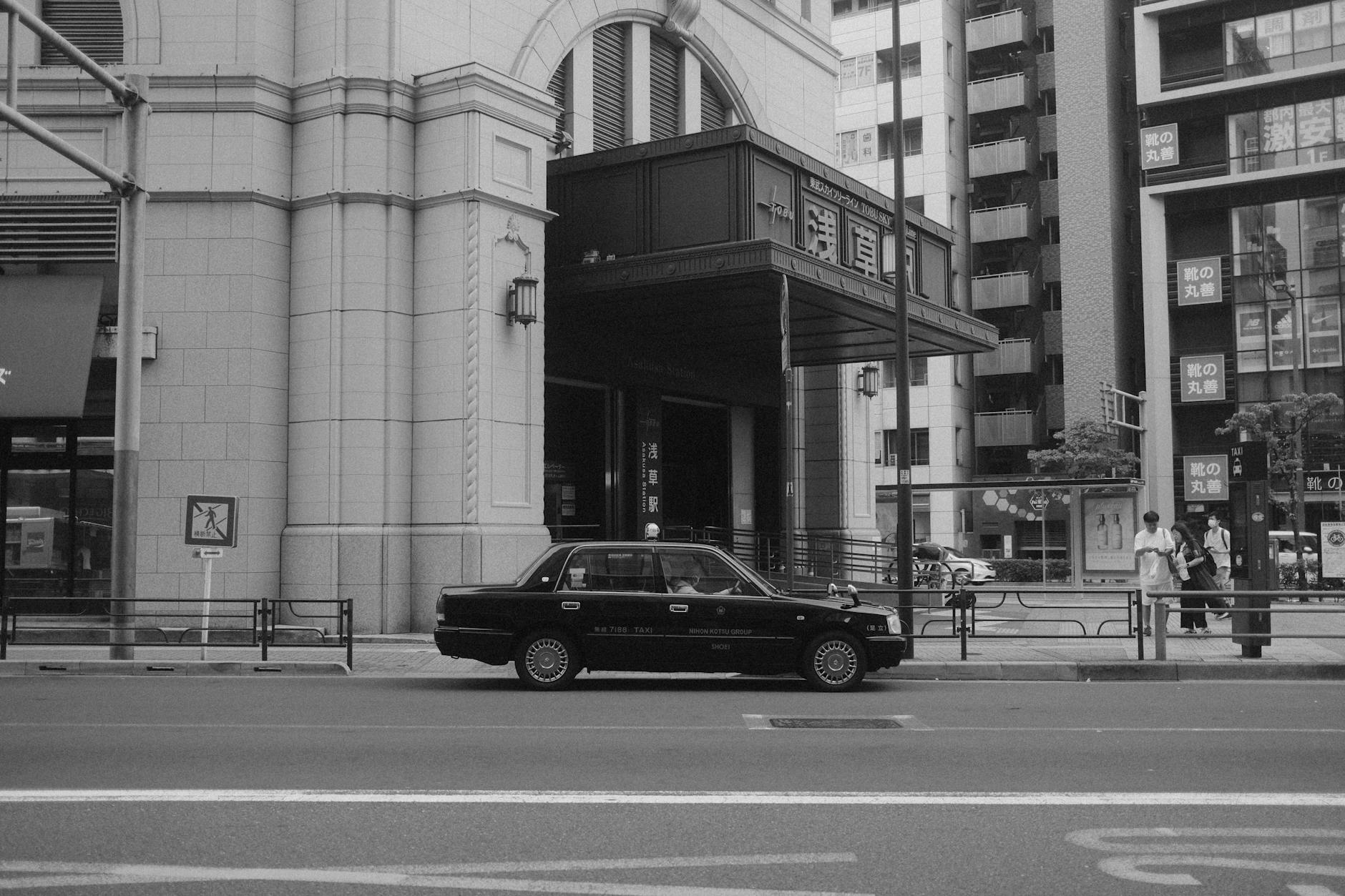
Tokyo Cab Drivers Memorize an Entire City Without GPS — And Neuroscientists Are Fascinated
Pull up Google Maps right now. Go ahead. Somewhere in the back of your mind, you probably can't even picture the route from your house to your office without it. That's not a personal failing — it's just what happens when you outsource navigation to an algorithm for long enough.
Now consider this: there are taxi drivers in Tokyo who can take you from one obscure neighborhood to another, through a city of 14 million people with no logical street grid, no GPS, and no hesitation. They do it entirely from memory. And the way they built that memory is one of the more fascinating stories in modern neuroscience.
A City Designed to Confuse
Tokyo is not a city that makes navigation easy. Unlike American cities with their tidy numbered grids, Tokyo evolved organically over centuries — a dense, sprawling tangle of streets that curve, dead-end, and rename themselves without warning. Addresses are assigned by block, not by street. Neighborhoods fold into each other without clear boundaries. Even longtime residents regularly get lost.
For a taxi driver, this is the daily reality. And Tokyo's professional cab drivers — particularly those working for the city's major companies — are expected to know it cold.
The training process is notoriously demanding. New drivers spend months, sometimes over a year, studying maps and physically riding routes before they're considered road-ready. They memorize not just streets but landmarks, shortcuts, hotel locations, hospital entrances, the back ways into major train stations. They build what researchers call a "cognitive map" — an internal, three-dimensional mental model of the city that they can navigate fluidly and update in real time.
It's less like memorizing facts and more like constructing a living mental world.
What Scientists Found When They Looked Inside
The brain science here is genuinely surprising, and it connects to some well-known research you may have heard about in a different context.
Studies on London's famously rigorous taxi licensing exam — "The Knowledge," which requires drivers to memorize 25,000 streets — found that licensed cabbies showed measurable increases in the size of the hippocampus, the brain region most associated with spatial memory and navigation. The more years of experience a driver had, the more pronounced the change. The brain had physically restructured itself in response to sustained navigational demand.
Researchers studying Tokyo drivers have found similar patterns. The act of building and maintaining a detailed cognitive map isn't just a job skill — it's a neurological workout. It activates and strengthens memory systems that are also involved in learning, pattern recognition, and even emotional regulation.
The flip side is equally interesting: studies have suggested that heavy GPS reliance may actually reduce activity in those same hippocampal regions over time. When you stop asking your brain to navigate, it quietly stops investing in the infrastructure that makes navigation possible.
This isn't a reason to panic about your phone. But it is a reason to think about what you might be quietly giving up.
The American Driver's GPS Dependency
In the U.S., GPS adoption has been near-total. A 2023 survey found that the vast majority of American drivers use navigation apps on almost every trip — including routes they've driven dozens of times. We've essentially handed the spatial thinking part of driving over to our phones, and most of us barely noticed it happening.
The Tokyo taxi model offers a useful counterpoint. Not because every American should memorize their city block by block, but because the underlying principle — actively engaging with your environment rather than passively following instructions — has real cognitive benefits that are worth reclaiming in small ways.
Practical Ways to Think More Like a Tokyo Cab Driver
You don't need to ditch your GPS entirely. But here are a few low-effort ways to start rebuilding your mental map muscles:
Try one GPS-free trip per week. Pick a route you sort of know and navigate it from memory. Wrong turns are fine — that's actually how spatial memory gets built. The mild discomfort of uncertainty is the point.
Study a map before you drive, not during. Before heading somewhere new, spend two minutes actually looking at a map. Notice the major cross streets, the general direction, one or two landmarks. Then put the phone away and see how far you get.
Name your landmarks out loud. Tokyo drivers actively verbalize routes during training. Saying "left at the water tower, right at the Walgreens" out loud — even just to yourself — encodes the route more deeply than passively following a blue line.
Explore without a destination. Take a drive with no particular goal and no navigation. Just pay attention to how streets connect. It feels aimless, but your brain is quietly building architecture.
The Deeper Takeaway
There's something almost philosophical about the way Tokyo's best cab drivers work. In a city that seems designed to defeat navigation, they've responded not by finding a better tool, but by becoming better thinkers. They've built internal worlds detailed enough to rival any map app.
Neuroscience suggests that process changes the brain in lasting, meaningful ways. And while none of us are signing up for a year of Tokyo street memorization, the idea that driving can be an active, brain-engaging experience — rather than a passive follow-the-arrow exercise — is worth sitting with.
The road has always been one of the best places to think. Maybe the trick is to actually let yourself do it.