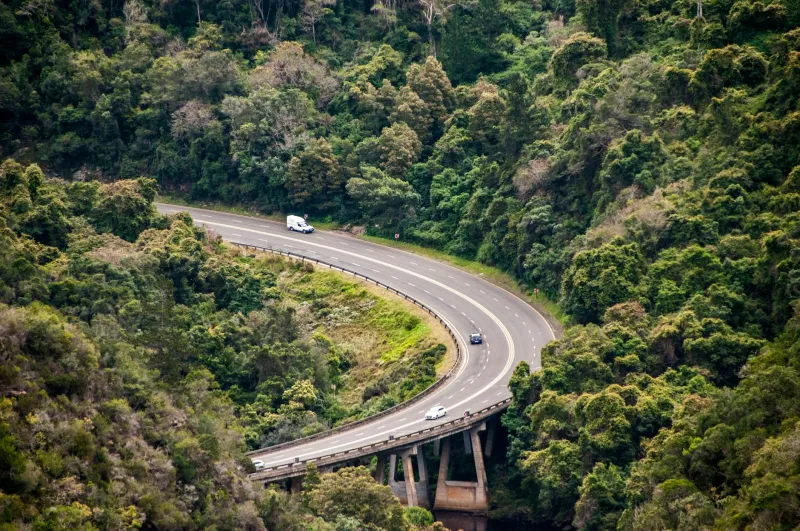
There's a Stretch of Road That Changes Your Brain
You know the feeling. You're driving along, maybe on a long trip, and suddenly you hit a section of highway that just feels... different. Your shoulders relax. Your breathing slows. The road ahead seems to flow like water, and for twenty or thirty miles, driving stops feeling like work.
Most people chalk this up to scenery or less traffic. But a growing group of researchers studying transportation psychology have discovered something much weirder: certain roads actually trigger measurable changes in brain activity that promote a meditative state. And it's not accidental.
The Math Behind the Magic
Dr. Sarah Chen, a transportation researcher at UC Berkeley, has spent the last five years studying what she calls "therapeutic road geometry." Using EEG sensors to monitor drivers' brain activity, her team has identified specific mathematical relationships in road design that consistently produce calming effects.
 Photo: UC Berkeley, via logos-world.net
"We found that roads with gentle curves following what's called a 'clothoid spiral' — where the curvature changes gradually rather than suddenly — synchronize with natural brain rhythms," Chen explains. "It's similar to how certain music or meditation practices work."
The clothoid spiral isn't new — it's been used in highway design since the 1930s for safety reasons. But Chen's research suggests these curves do more than prevent accidents. When spaced at intervals that match the brain's alpha wave frequency (8-12 Hz), they create a kind of visual metronome that promotes relaxation.
The effect is strongest when curves are spaced about 800-1200 feet apart — roughly the distance your eyes can comfortably track ahead while driving at highway speeds.
Trees Are Part of the Formula
Road geometry is only half the equation. Environmental psychologist Dr. Marcus Williams at the University of Washington has discovered that tree placement along highways follows patterns that either enhance or disrupt the calming effect.
"The most relaxing roads have trees spaced at irregular intervals that mimic natural forest patterns," Williams says. "When trees are planted in rigid, uniform rows — like many interstate medians — they can actually increase driver stress by creating a visual strobe effect."
His research shows that roads lined with mixed-species trees, planted to look random but actually following mathematical models of natural growth, reduce cortisol levels in drivers by up to 23%. The key is what foresters call "visual complexity" — enough variation to be interesting, but not so much that it becomes overwhelming.
Some of the most calming roads in America, according to Williams' data, include sections of Highway 101 through Northern California's redwood forests and parts of the Blue Ridge Parkway in Virginia — both designed to work with existing tree patterns rather than against them.
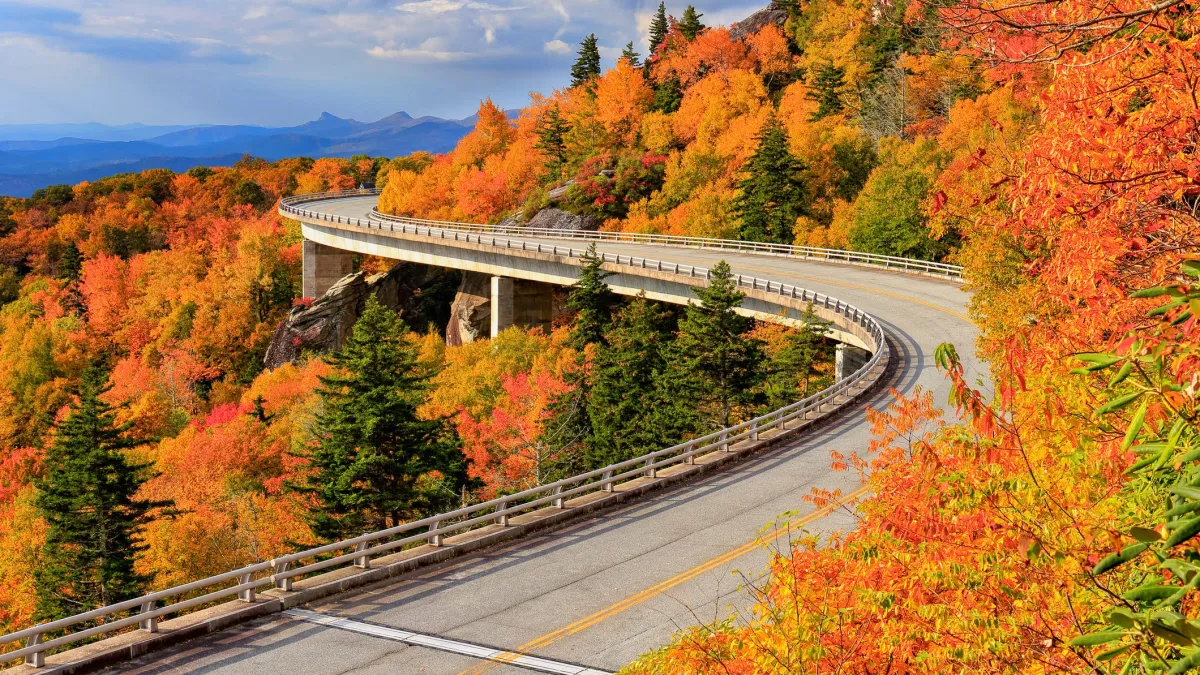 Photo: Blue Ridge Parkway, via www.gannett-cdn.com
The Sound Your Tires Make Matters More Than You Think
Perhaps the most surprising discovery involves pavement texture. Dr. Jennifer Martinez, an acoustic engineer at the Federal Highway Administration, has found that different road surfaces produce tire noise at frequencies that can either promote alertness or relaxation.
"Most people don't consciously notice tire noise while driving," Martinez explains. "But your brain is constantly processing those sound frequencies, and they have a measurable impact on mood and stress levels."
Standard concrete highways produce tire noise in the 1000-2000 Hz range — frequencies that keep drivers alert but can cause fatigue on long trips. But newer "quiet pavement" designs, originally developed to reduce noise pollution, accidentally stumbled onto something interesting.
These pavements, made with specially sized aggregate and specific surface textures, produce tire noise in the 200-400 Hz range — the same frequency range used in sound therapy and meditation apps. Drivers on these surfaces report feeling more relaxed and less fatigued, even on long trips.
The Accidental Meditation Highways
Some of America's most beloved scenic drives turn out to be accidental masterpieces of calming design. The Pacific Coast Highway between San Francisco and Los Angeles scores high on all three factors: gentle curves that follow natural coastline geometry, irregular tree and vegetation patterns, and sections of quiet pavement that produce soothing tire harmonics.
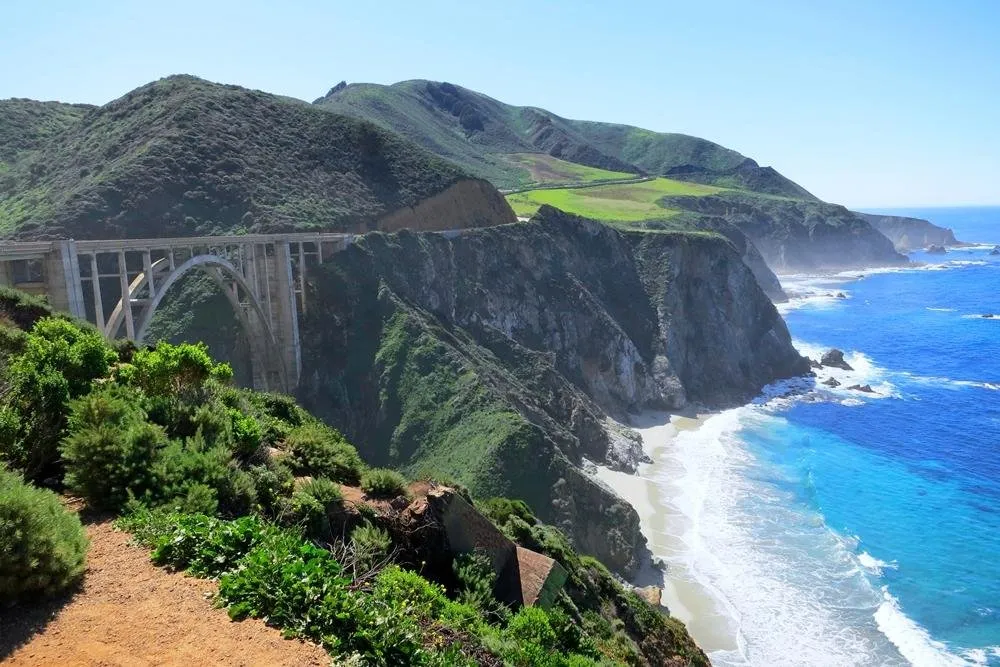 Photo: Pacific Coast Highway, via dynamic-media-cdn.tripadvisor.com
But you don't need a famous scenic route to experience the effect. Dr. Chen's team has identified "therapeutic sections" on ordinary highways across the country — stretches where good geometry, natural landscaping, and appropriate pavement surfaces combine to create unexpectedly calming drives.
Interstate 84 through the Columbia River Gorge in Oregon, Highway 2 through North Dakota's prairie country, and even sections of I-77 through the Appalachian foothills of West Virginia all rank high on their "road therapy" scale.
Why Engineers Are Starting to Pay Attention
This research isn't just academic curiosity. Transportation departments are beginning to realize that road-induced stress contributes to aggressive driving, accidents, and driver fatigue. If certain design elements can promote calmer, more focused driving, that's a public safety issue.
Some states are already experimenting with "therapeutic design" principles in new highway construction. Colorado's Department of Transportation recently incorporated variable curve spacing and natural landscaping patterns into a section of I-70, based partly on Chen's research.
Early results suggest drivers on the experimental section report less fatigue and show fewer aggressive driving behaviors compared to adjacent traditional highway sections.
The Unintended Consequences of Interstate Design
The flip side of this research is sobering. Many interstate highways, designed purely for efficiency and speed, accidentally create stress-inducing environments. Long straight sections with repetitive landscaping and harsh concrete surfaces can promote highway hypnosis and driver fatigue.
"We built a highway system optimized for moving vehicles quickly," Chen notes. "But we didn't consider the psychological impact on the humans inside those vehicles. Some of our roads are accidentally making people more stressed, more aggressive, and more prone to accidents."
The good news? Understanding the science of calming road design means we can start building highways that work better for both cars and human psychology. Your next road trip might just be a little more zen than you expected.