The Lost Art of Writing Your Way Down the Highway
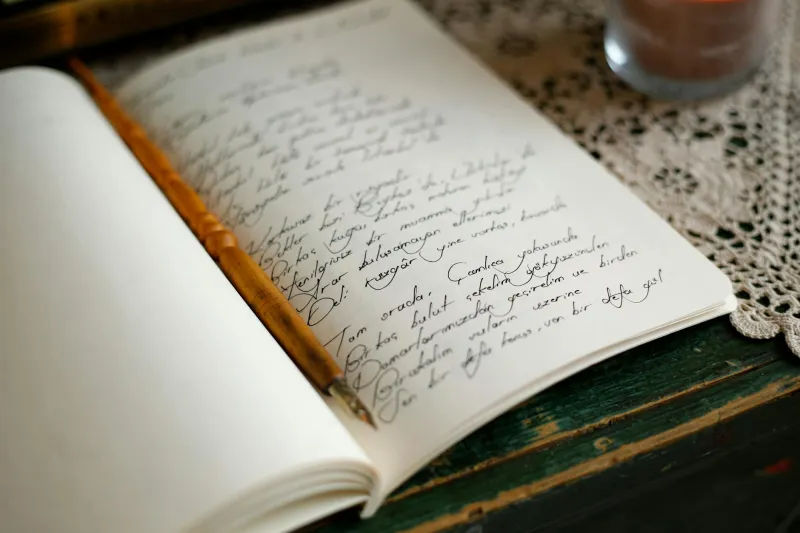
In an age when your phone can navigate, track expenses, and even predict bathroom breaks, Tom Richardson still pulls out a leather-bound notebook at every gas station. For the past fifteen years, this retired engineer from Phoenix has meticulously logged every mile of his cross-country adventures in careful handwriting, creating a personal archive that no app could replicate.
"My friends think I'm nuts," Richardson admits, "but my road log tells stories that GPS never could." His notebooks read like a hybrid of scientific journal and travel memoir — fuel efficiency calculations mixed with observations about roadside diners and weather patterns that shaped each journey.
Richardson isn't alone. Across America, a small but passionate community of drivers has quietly revived the practice of handwritten road logging, insisting that this pre-digital ritual makes them better travelers and more attentive drivers.
When Drivers Were Their Own Data Scientists
Before smartphones turned every driver into a passive passenger in their own navigation experience, serious road trippers maintained detailed logs as a matter of survival. In the 1950s and 60s, AAA even published guidelines for proper road log keeping, treating it as an essential skill for long-distance driving.
These weren't simple odometer readings. Veteran loggers tracked fuel economy down to the tenth of a mile per gallon, noted road surface conditions, recorded weather impacts on driving time, and catalogued the reliability of different service stations. Their notebooks became personalized travel intelligence that improved with every trip.
James Murphy, whose father kept road logs throughout the 1960s, inherited boxes of these handwritten chronicles. "Reading his logs is like having a conversation with him about every road trip we took," Murphy explains. "He noted which rest stops had the cleanest bathrooms, where we saw our first buffalo, even what songs were playing on the radio during specific stretches of highway."
The Neuroscience of Writing Your Way to Better Driving
Modern research suggests that handwritten road logs do more than preserve memories — they might actually make you a superior driver. Dr. Lisa Chen, a cognitive neuroscientist at UC Berkeley, has studied how handwriting affects spatial awareness and memory retention.
"When you physically write down information about your route, you're engaging multiple brain systems simultaneously," Chen explains. "The motor cortex controls your hand movements, the visual cortex processes what you're writing, and the hippocampus encodes the spatial relationships. This creates much stronger neural pathways than simply following GPS directions."
Her research shows that drivers who maintain handwritten logs demonstrate measurably better route recall, more accurate distance estimation, and improved awareness of road conditions compared to those who rely purely on digital navigation.
The Modern Road Log Renaissance
Today's road log enthusiasts have adapted the practice for contemporary travel while preserving its essential benefits. Sarah Kim, a software developer from Seattle, has logged over 200,000 miles across 47 states in the past decade.
"I use GPS for navigation, but I write everything down afterward," Kim explains. "Fuel costs, interesting landmarks, road construction delays, even the quality of different truck stops. After ten years, I have patterns that no app could show me."
Kim's logs reveal insights that algorithmic route planning misses. She's identified seasonal patterns in traffic flow, discovered that certain gas station chains consistently offer better prices in specific regions, and mapped out a network of reliable charging stations for electric vehicles that predates most commercial databases.
Beyond Data — The Art of Travel Documentation
While efficiency matters, many modern loggers are equally motivated by the creative aspects of documentation. Their notebooks blend practical information with personal reflection, creating travel artifacts that capture the full experience of the journey.
Mike Santos, a professional photographer who logs his equipment transport trips across the Southwest, includes sketches of interesting cloud formations and notes about how different types of light affect driving visibility. "My road logs have become a combination of technical manual and art journal," he says.
The Community of Careful Observers
Road log enthusiasts have formed informal networks, sharing techniques and insights through online forums and annual meetups. They've developed standardized symbols for different types of observations, created templates for consistent data collection, and even established protocols for sharing information about road conditions.
This community approach transforms individual logs into collective intelligence. When longtime logger Patricia Webb discovered that a particular mountain pass consistently showed better fuel economy in the morning versus afternoon, she shared this observation with the community. Other drivers confirmed the pattern, leading to the discovery that temperature-related air density changes were affecting engine performance in predictable ways.
What Digital Navigation Can't Replace
GPS excels at getting you from point A to point B, but it can't replicate the deep geographic awareness that comes from actively documenting your travels. Road loggers develop an intuitive understanding of how geography, weather, and infrastructure interact — knowledge that makes them more adaptable when technology fails.
"When my GPS died in rural Montana, I wasn't panicked," recalls longtime logger David Park. "My road logs from previous trips through the area gave me enough information to navigate using landmarks and road signs. I actually enjoyed the challenge."
The Slow Travel Movement Meets the Fast Lane
The revival of road logging reflects a broader cultural shift toward mindful travel. In an era when we can drive coast-to-coast while barely looking up from our phones, handwritten logs force drivers to actively engage with their environment.
"Writing slows me down in a good way," explains Kim. "When I know I'm going to document something, I pay more attention to details I might otherwise miss. My road logs have made me a more curious traveler."
For these dedicated documentarians, the real destination isn't the place they're driving to — it's the deeper understanding of the journey itself that comes from writing their way down America's highways, one careful observation at a time.