Before GPS, Highway Builders Read the Sky Like a Roadmap — And Their Math Still Guides Your Commute
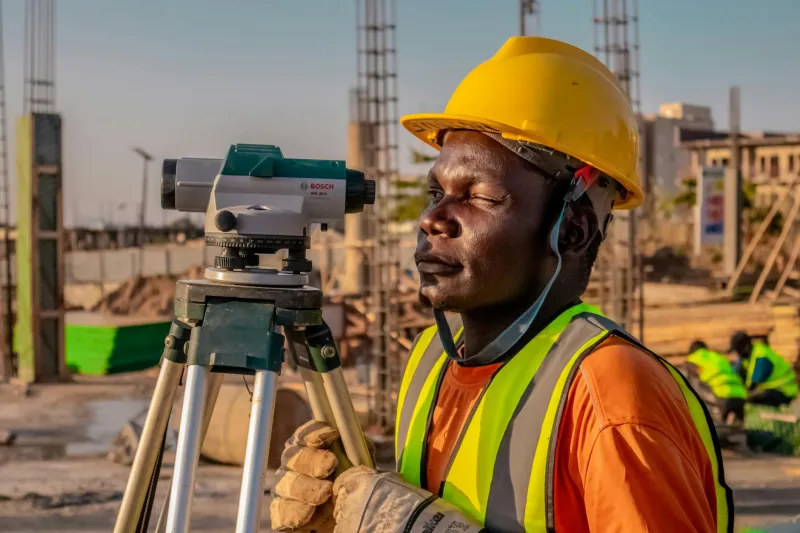
Before GPS, Highway Builders Read the Sky Like a Roadmap — And Their Math Still Guides Your Commute
The next time you cruise down a perfectly straight stretch of interstate, consider this: the person who laid out that road might have done it by watching shadows move across the ground and tracking stars across the night sky.
Between 1900 and 1930, as America rushed to build its first comprehensive highway system, a small army of engineer-astronomers roamed the country with horse-drawn wagons packed full of telescopes, transit instruments, and star charts. These road builders didn't have GPS, laser levels, or even reliable maps of much of the territory they were surveying. Instead, they borrowed techniques from ancient Babylonian astronomers and 18th-century ship navigators to plot highways across thousands of miles of unmapped wilderness.
The Wagon Train Astronomers
Picture this: It's 1915, and you're part of a highway survey crew working your way across Montana. Your "office" is a canvas-covered wagon loaded with brass instruments that look like they belong on a pirate ship. Every morning before dawn, you set up a telescope to take readings on specific stars. At noon, you plant a wooden stake in the ground and spend hours measuring the angles of its shadow as the sun moves across the sky.
This wasn't some primitive guesswork. These highway astronomers were using celestial navigation techniques that were, in many ways, more sophisticated than the tools available to most land surveyors of the era. While local surveyors relied on compass bearings that could be thrown off by iron deposits or magnetic anomalies, the highway crews were literally using the rotation of the Earth itself as their reference point.
Shadow Math That Still Works Today
The most elegant part of their system involved what they called "solar observations." At precisely noon (calculated for their exact longitude), they would drive a perfectly vertical rod into the ground and measure the length and direction of its shadow. By combining this with readings taken at sunrise and sunset, they could determine their exact position on Earth's surface with an accuracy that often exceeded modern expectations.
One highway engineer from the 1920s, working on what would eventually become part of the interstate system through Nevada, left behind field notes that read like a combination of surveying manual and astronomy textbook. "Polaris bearing confirmed at 2.3 degrees east of true north," one entry reads. "Shadow length at solar noon: 4 feet, 7 inches. Ground slope correction applied. Benchmark established."
That benchmark? Modern GPS equipment located it in 2018, and found the engineer's calculations were accurate to within three inches.
The Tools of Celestial Road Building
These highway astronomers carried an impressive array of instruments, many of which they modified themselves for the specific challenges of road building. The standard kit included:
A theodolite for measuring precise angles to celestial objects. Unlike modern electronic versions, these were purely mechanical devices with brass gears and hand-ground lenses.
A chronometer — essentially a very expensive pocket watch — calibrated to keep accurate time regardless of temperature changes or the jolting of wagon travel. Knowing the exact time was crucial for celestial navigation.
Star charts specific to their latitude, often hand-drawn and annotated with notes about which stars provided the most reliable bearings for road work.
A collection of wooden stakes and metal markers for establishing what they called "celestial benchmarks" — reference points tied not to local landmarks but to the positions of stars.
Why Ancient Techniques Worked Better Than Modern Assumptions
What's remarkable is how well this system worked for the specific challenges of highway building. Unlike ship navigation, where you're trying to find your position on a featureless ocean, road builders needed to establish long, straight lines across varied terrain. The celestial approach was perfect for this.
By using star positions as their primary reference, these engineers could lay out highway routes that maintained consistent bearings across hundreds of miles. They weren't dependent on local landmarks that might be obscured by forests or mountains. A road segment surveyed in the plains of Kansas could be perfectly aligned with a segment surveyed months later in the Colorado mountains, all because both crews were using the same stars as their reference points.
The Legacy Hidden in Plain Sight
Many of the highways these celestial engineers laid out became the foundation for our modern interstate system. When highway planners in the 1950s were designing routes for the new interstate highways, they often followed the paths established by these early astronomical surveys.
More surprisingly, some of the original celestial benchmarks are still in use today. Modern surveying crews occasionally stumble across brass markers from the 1910s and 1920s, stamped with cryptic notations like "POLARIS 1923" or "SOLAR OBS PT." When they check these markers with GPS, they often find them to be more accurate than benchmarks established with more "modern" techniques from the 1940s and 1950s.
The Road Forward
The next time you're driving a long, straight stretch of highway that seems to cut through the landscape with mathematical precision, you might be following a path first traced by someone watching the stars wheel overhead more than a century ago. These forgotten highway astronomers left us more than just roads — they left us a reminder that sometimes the most sophisticated technology is also the most ancient.
In an age when GPS can guide us anywhere, there's something deeply satisfying about knowing that the roads beneath our wheels were originally laid out by people who found their way by reading the sky.