The Unlikely Birth of Highway Cuisine
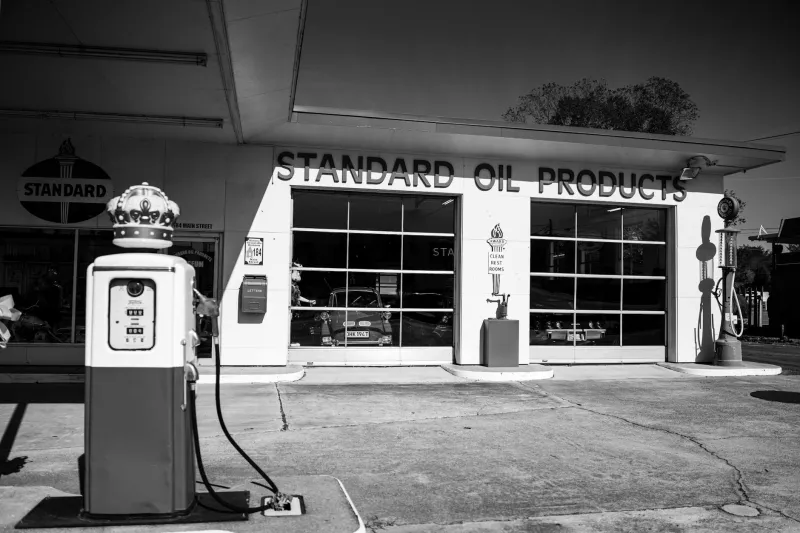
In 1925, a Standard Oil station in Ohio started wrapping ham sandwiches in wax paper and selling them for 15 cents alongside gasoline. The owner, tired of watching hungry travelers drive past his pumps in search of restaurants, figured he could solve two problems at once. What he didn't realize was that he'd just invented America's first highway food culture.
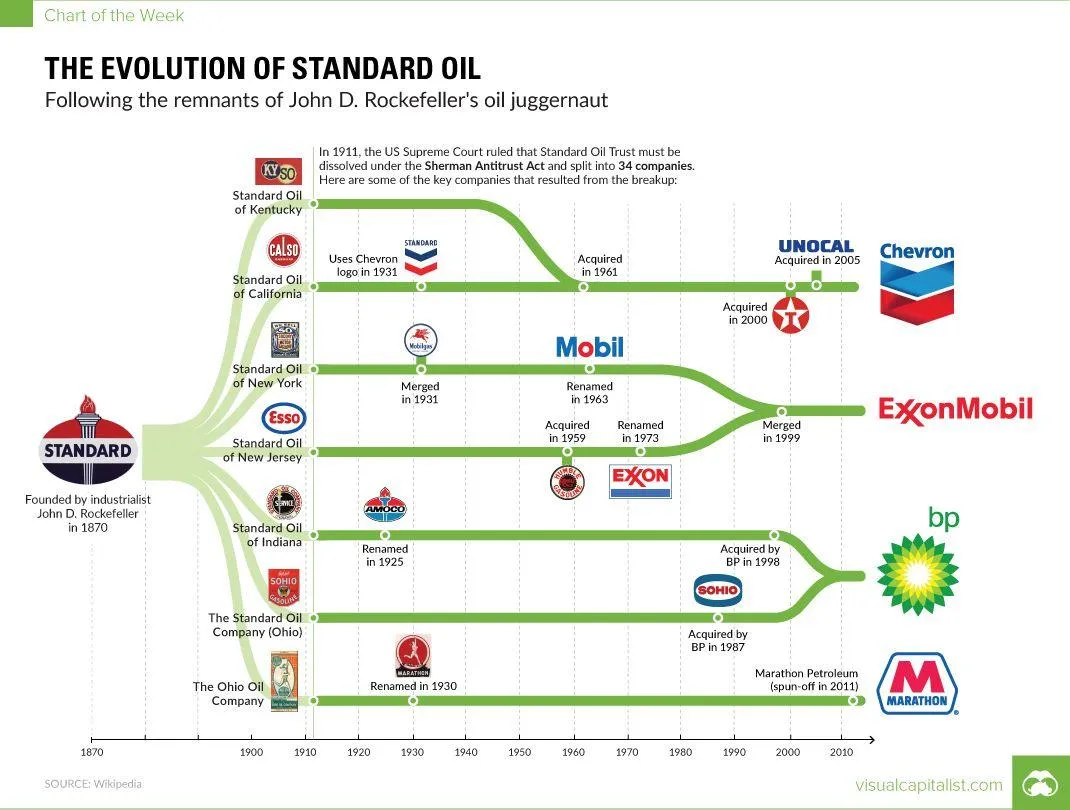 Photo: Standard Oil, via logodix.com
Within a decade, gas stations across the country were serving everything from fresh-baked pies to elaborate "auto sandwiches" — thick combinations of meat, cheese, and pickles designed to be eaten one-handed while driving. These weren't the sad convenience store offerings we know today. Station owners took pride in their food, often featuring local specialties that reflected the regional character of American highways.
The Science Behind Station Sandwiches
The wax paper wrapper wasn't just packaging — it was engineering. Station owners discovered that certain paper treatments could keep sandwiches fresh for hours in hot cars, while special folding techniques prevented ingredients from sliding around during bumpy rides. The most successful stations developed signature sandwich architectures: sturdy bread that wouldn't fall apart, strategic condiment placement to avoid soggy spots, and ingredient combinations that actually improved with a little time to meld together.
Texaco stations became famous for their "Motor Club Special" — a towering sandwich with turkey, ham, Swiss cheese, and a proprietary spread that station attendants mixed fresh each morning. Shell stations in the Southwest pioneered the "Desert Driver," featuring spiced beef and cooling cucumber that helped combat the heat of cross-desert drives.
The Pie Stop Phenomenon
By the 1930s, Rand McNally was officially recommending specific gas stations not for their fuel quality, but for their food. The company's travel guides featured detailed reviews of station restaurants, with special attention paid to regional pie specialties. A Phillips 66 station in Kansas became legendary for its mile-high apple pie, while a Sinclair station in Montana drew travelers hundreds of miles out of their way for fresh huckleberry tarts.
 Photo: Rand McNally, via images-na.ssl-images-amazon.com
These pie stops created an entire subculture of American travel. Families planned cross-country trips around specific stations, and truckers developed informal networks sharing information about which stops had the freshest coffee and warmest cobbler. Some stations became so popular for their food that they had to hire dedicated cooks and expand their dining areas.
The Regional Flavor Map
What made this era special was how deeply connected station food was to local ingredients and traditions. In Louisiana, Esso stations served po' boys with fresh Gulf shrimp. Wisconsin Mobil stations featured bratwurst sandwiches with local cheese. California Chevron stops pioneered the "avocado burger" decades before it became trendy.
Station owners sourced ingredients from nearby farms, creating a farm-to-highway movement that connected travelers directly to regional food cultures. A cross-country drive in the 1940s was essentially a culinary tour of America, with each fuel stop offering a taste of local specialties that couldn't be found anywhere else.
The Great Disappearance
The decline came swiftly in the late 1950s and early 1960s. As interstate highways bypassed small towns, large fast-food chains began securing prime locations at major interchanges. McDonald's, Burger King, and other franchises offered standardized food that could be prepared quickly by minimally trained staff — a stark contrast to the skilled station cooks who had been crafting regional specialties.
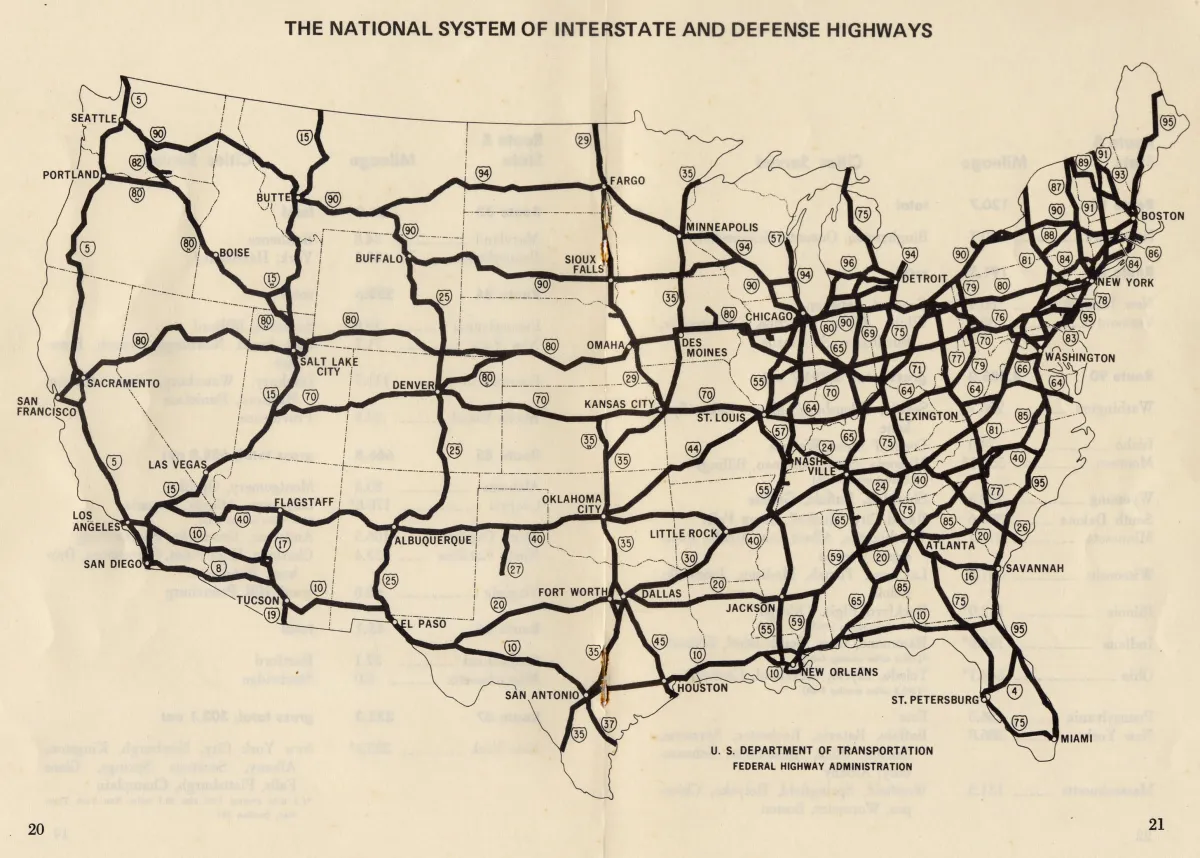 Photo: Interstate highways, via betterexplained.com
The final blow came with changing regulations that separated food service from fuel sales in many states, making it economically difficult for gas stations to maintain full kitchens. By 1970, the era of station restaurants had essentially ended, replaced by the pre-packaged convenience foods we associate with gas stations today.
What We Lost
Modern travelers have no idea what they're missing. The station food culture of the early automotive era represented something uniquely American: the marriage of mobility and local flavor, of efficiency and craftsmanship. These weren't just meals — they were edible postcards from different regions of the country.
Today's highway food is optimized for speed and consistency, but those old station sandwiches were optimized for the journey itself. They were designed to make long drives more pleasant, to give travelers a reason to slow down and connect with the places they were passing through.
The next time you're stuck with another forgettable fast-food meal at a highway rest stop, remember that American road food was once an art form — one that disappeared so completely that most people don't even know it existed.