When Your Car Broke Down, America Had Your Back
Picture this: You're driving through rural Kansas in 1925. Your Model T starts making that grinding sound that means you're about to be walking. There's no cell phone, no roadside assistance, no GPS to find the nearest garage. Just you, a broken car, and an empty road stretching to the horizon.
But you're not really alone. Because in early automotive America, breaking down activated an invisible network of mutual aid that would seem almost magical today. Any passing driver was bound by an unwritten code to stop and help — no questions asked, no payment expected.
This wasn't just neighborly kindness. It was a survival system born from necessity, maintained by honor, and so deeply ingrained in American road culture that it lasted well into the 1960s.
The Universal Hand Signal That Meant "I Need Help"
Every driver in the 1920s and 1930s knew the signal: a white cloth tied to the left side of your car, usually on the door handle or side mirror. It was the automotive equivalent of a distress flag at sea, and it carried the same moral weight.
Ignoring a white flag was considered a serious breach of road etiquette — the kind of thing that could get you shunned in small-town America. Because everyone understood the basic truth of early motoring: today it's them, tomorrow it might be you.
"My grandfather always kept a clean white handkerchief in the glove box, just for that purpose," remembers Betty Morrison, 89, whose family ran a general store in rural Nebraska during the Depression. "He said it was like carrying a life preserver. You hoped you'd never need it, but you'd be a fool to travel without it."
The white flag system worked because it was universal and unmistakable. Unlike hand gestures or horn signals, which could be misunderstood, a white cloth meant one thing: genuine emergency.
The Traveling Tool Library
Early cars broke down constantly. Flat tires were almost daily occurrences. Engines overheated. Belts snapped. Electrical systems failed in ways that would puzzle modern mechanics.
But here's what's remarkable: most drivers carried not just tools for their own car, but extra tools specifically to help others. A typical "road kit" in the 1930s included spare fan belts for different car models, extra tire patches, universal wrenches, and even spare spark plugs.
"Drivers knew that helping someone else meant you'd be helped when your time came," explains automotive historian Dr. James Patterson. "It was like a traveling insurance policy, except instead of paying premiums, you carried extra weight and stopped to help strangers."
Some tools were considered communal property. Heavy items like tire jacks and lug wrenches were routinely shared between drivers. It wasn't uncommon for a broken-down motorist to be lent tools by three or four different passing drivers, each contributing what they had.
The most valuable shared resource? Knowledge. In an era when every car model had different quirks and repair procedures, experienced drivers were walking repair manuals. They'd not only lend tools but teach you how to use them.
The Credit System That Ran on Trust Alone
Small-town garages operated on a remarkable honor system. If you broke down on a Sunday or after hours, most garage owners would leave their shops unlocked with a sign: "Take what you need, leave money in the coffee can."
This wasn't naive optimism — it was practical necessity. Cars didn't break down on schedule, and garage owners knew that stranded travelers might be facing genuine danger if they couldn't get moving again.
"My dad ran a garage in Wyoming from 1928 to 1965," says Robert Chen, whose father immigrated from China and built a reputation for honest dealing. "He always said Americans were fundamentally decent people when they were away from home. Nobody ever cheated him on the honor system. Not once."
The trust went both ways. Garage owners would often advance parts or labor to stranded travelers, accepting nothing more than a name and home address as collateral. Payment would arrive by mail weeks later — and it almost always did.
Some garages kept "traveler ledgers" — books where stranded motorists could record what they'd taken and promise payment. These ledgers, when they survive, read like testaments to American honesty: "Took 1 fan belt and 2 quarts oil, will send $3.50 from Denver — John Smith, Michigan plates."
The Unwritten Rules of Road Assistance
The mutual aid system had its own etiquette, passed down informally but followed religiously:
Stop for anyone displaying distress signals. This wasn't optional. Drivers who repeatedly ignored white flags would find themselves unwelcome at garages and diners along their regular routes.
Offer what you can, accept what's offered. If someone stopped to help you, refusing their assistance was considered rude. If you couldn't fix their problem, you were expected to at least offer water, food, or a ride to the nearest town.
No payment for basic help. Accepting money for simple roadside assistance — changing a tire, sharing tools, providing directions — was considered inappropriate. Help was freely given and freely received.
Women and children first. A car with women or children received priority help. Male drivers would often escort stranded families to the nearest town, even if it meant significant detours.
Share information. If you knew about road conditions, weather, or reliable garages ahead, you were obligated to share that information with other drivers.
When the System Started Breaking Down
Several factors gradually eroded the mutual aid culture. The Interstate Highway System, launched in 1956, moved traffic onto limited-access roads where stopping was more dangerous and less convenient. Cars became more reliable, reducing the frequency of breakdowns.
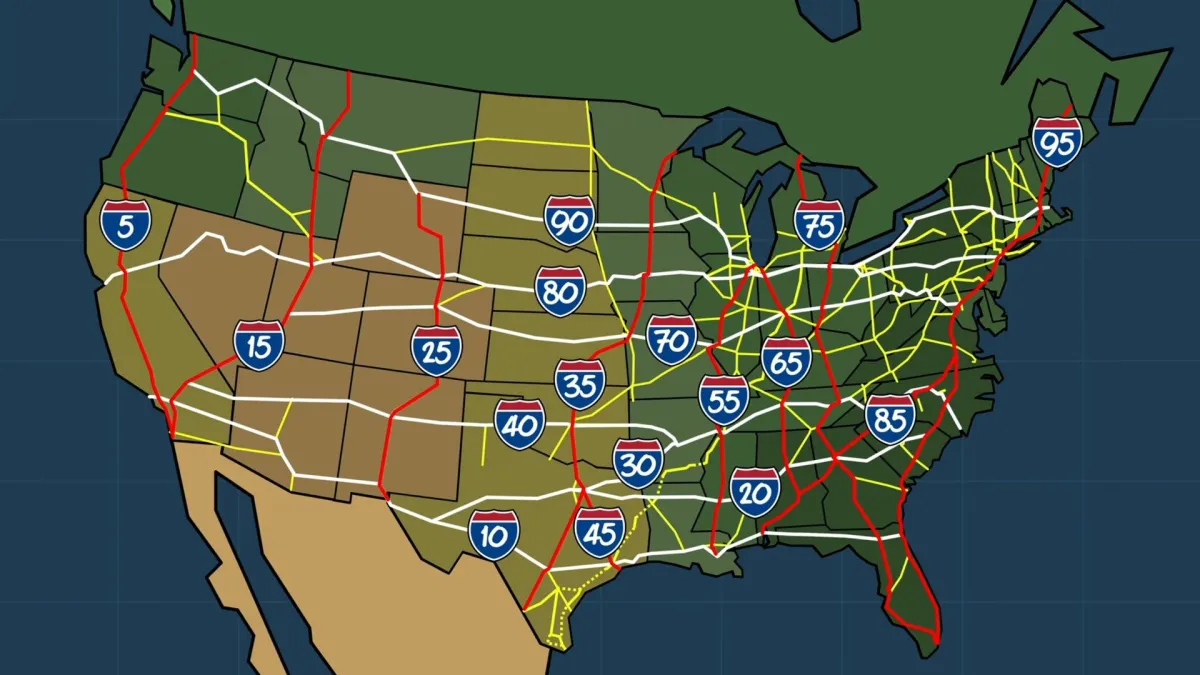 Photo: Interstate Highway System, via i.pinimg.com
But the biggest change was cultural. As America became more urban and anonymous, the small-town values that supported mutual aid began to fade. The rise of commercial roadside assistance services like AAA (founded in 1902 but not widely available until the 1950s) provided an alternative to depending on strangers.
By the 1960s, stopping to help strangers was becoming less common. By the 1970s, it was often discouraged for safety reasons.
What We Lost When We Gained Reliability
Modern cars rarely break down, and when they do, we have cell phones and professional roadside assistance. But something was lost in the transition from mutual aid to commercial service.
"The old system created connections between strangers," notes social historian Dr. Maria Santos. "People met each other, shared stories, sometimes formed lasting friendships. It was a form of social bonding that helped knit the country together during a time of rapid change."
The stories from that era are remarkable: business partnerships formed over roadside repairs, marriages that started with a flat tire, lifelong friendships born from shared adversity on lonely highways.
Today, when we see a stranded motorist, most of us assume they'll call for help. We've gained efficiency and safety, but we've lost something harder to quantify — the knowledge that in a crisis, strangers would stop their own lives to help us continue ours.
The next time you see someone broken down on the highway, remember: there was once a time when stopping wasn't just the right thing to do — it was the American thing to do.